Showing posts with label study. Show all posts

Tuesday, November 5, 2019

Space1 Remote Flora Fauna Study Tips

Tips on Remote Flora and Fauna Study

The main conditions to look for are increased atmospheric transparency, opacity and the time of day. The early morning and late evening can create a stark shadow cast but don't go too deep on the shadows or they can overlap and block other views. Early mornings may retain fog until the afternoon sun burns it off.

Seasonal variations may cause fog in the morning and rain mist and haze will all block viewing. Do not exceed the criteria of magnification per unit inch aperture and do employ methods of amping the equipment. Stop study and protects all instruments and accessories during periods of air pollution and smoke as it can etch and ruin a delicate telescopes surface optics dielectric glass and mirror coatings. Light mist can deliver high concentrations of acid rain, which is deadly to humans and scientific equipment.

The correct character selection filters will penetrate the atmosphere resulting in greater clarity. Red and IR are both atmosphere penetrating so choose a CCD with matching sensitivity. Use a manually positioned mount and a camera holder for stability. Once a subject of protracted study is found, capture video for later processing. Capture stills of high resolution for counting plants and mapping the distribution of forest jungle. Remember, the elevation of the mountain will determine the range possible for the study. A flat plane shows detail out to about 24 miles, after which the curvature of the Earth will block the surface features.

https://space1usa.blogspot.com/2019/10/tips-on-remote-flora-and-fauna-study.html
https://space1usa.blogspot.com/2019/10/singularity-observatory-study-of-remote.html
https://space1usa.blogspot.com/2019/10/humanoido-supplement-to-singularity.html

Tuesday, October 29, 2019

Humanoido Supplement to Singularity Observatory Study of Remote Mountain Wildlife Flora and Fauna by the Repurposing of Aplanatic HD Schmidt Cassegrain Amped Catadioptrics

World's largest Amped telescopes at Singularity Observatory are capable to ultra fine resolution
and perform double duty scientific studies through the evolution of time by safely viewing mountains
and jungles 100 miles away depending on conditions and the height of the mountain.


Humanoido Supplement to Singularity Observatory Study of Remote Mountain Wildlife Flora and Fauna by the Repurposing of Aplanatic HD Schmidt Cassegrain Amped Catadioptrics

Scientific Studies: Let's travel back through space and time to find the remaining oldest living species of plants and animals, that are living in modern day cities atop tall skyscraper gardens and landscapes.

The original study covers Flora as observed at remote mountains that have developed for millions of years of evolution within the archipelago Mountains Pacific Rift.

https://space1usa.blogspot.com/2019/10/singularity-observatory-study-of-remote.html

The study can have supplements as well, by a study within the closest modern skyscraper cities that surround the archipelago. Nearly every skyscraper has vegetation planted on rooftops, that are frequented by birds. These plants and birds can add significant data to the study collective of these species. What are the most common plant species found? Which are the oldest of evolution? What is the most common altitude at which the wildlife is found? Which birds have a habit of plant visitations? These and numerous other questions can be answered by this study.

Monday, October 28, 2019

Singularity Observatory Study of Remote Mountain Wildlife Flora and Fauna by the Repurposing of Aplanatic HD Schmidt Cassegrain Amped Catadioptrics

A Study of Remote Mountain Wildlife Flora and Fauna by the Repurposing of Aplanatic HD Schmidt Cassegrain Amped Catadioptrics

by Humanoido @ Singularity Observatory and Space1 Industries

Like the unperturbed evolution of wildlife on the Galapagos Islands, it’s imperative to safely study the ecology of jungle forest mountain wildlife and fauna within the archipelago Mountains Pacific Rift without disturbing surrounding ongoing evolution.

How to conduct a useful scientific study without actually trekking into the dangerous and treacherous mountainous regions and disturbing the pristine footprint of millions of years of ecology?

The author has developed an inventive application to monitor mountain vegetation and wildlife from a distance of up to twenty or more miles away depending on conditions. The instrument is a modified and enhanced catadioptric with an amped aperture over 1,400-inches in diameter. The program is a studies of animals, insects, birds, reptiles, plants, aquatics and any species within the instrument’s resolution at the time of given atmospheric conditions.

The conservationist program is conducted by Humanoido from a distance of about ten miles. The instrument is optically driven with multiple surfaces of fourth order differential curves, amplification equipment, dialectric filtering and specialized oculars. The Obs recording device is a specialized Deep CCD array with a high density multi core and multi spectral receiver for TB data. The gathered data is then fed into a mating reciprocating processing machine - the Reciprocal Image Processor Determinator, that enhances results.

The system includes the following programs of tremendous importance:

* The variety of plant and animal species are recorded and counted
* Forest Jungle densities and habitats are determined
* A determination is made for species counts as to whether the subject is going extinct or nominal in population
* New species are discovered and cataloged
* The evolution of jungle and forest is recorded along with any precipitating changes
* Activities of corresponding weather, seasonal conditions and changes are recorded
* Forest Jungle locations are noted for their densities of land, jungle vegetation, and animal density and types
* Mountain cartographic divisions are mapped out to specifications

Given the setup of the system, trekking into the mountain by proxi with  technology means is convenient and completely safe from poisonous spiders, snakes, killer wasps and bees, stinging army ants, poisonous beetles, harmful Komoda dragon Monitors, alligators, leeches and slugs, fungi and bacterial diseases, deadly virus mitigations, and other killer species. The system is convenient, and can be conducted from an outdoor deck or free open area in line of site to the Pacific mountain range. Stay tuned as this study continues.

Friday, August 16, 2019

Space1 Industries Zero G Study

SPACE1 Industries Zero G Study
Space1 is continuing its study of weightlessness within the spacecraft at the theoretical line of demarkation, for astronauts who are pure AI.

The study reveals the effects on neural nets of great sensitivity, electronics and other scientific apparatus. Zero G may supplement new inventions designed to facilitate space travel for AI life forms.

The xform of an AI brain is fully able to take advantage of weightless transposition in the thought process along with other effects. The results have advanced the position of AI astronauts significantly and demonstrates the viability of the spread of AI spacefaring life.

Friday, February 15, 2019

Space1 Zero Study

The ZERO Study
The Zero Study takes the accumulative effects of five Humanoido inventions and extrapolates the scientific background, education, and experiences they were based on.

The study is an effort to characterize the amount of understanding a person needs to purview invention information in a respectable, intellectual and cognitive fashion and rate ability to formulate reasonable comments. 

History
Warning! Case history shows some falling outside of the the established domain may be antagonistic, not able to perceive conceptual ideas, and the result is less than desirable childish behavior. These individuals with lesser minds of lesser learning capacity and limited patience are few in number.

Data
In today's modern high tech world moving towards merging with the Singularity, such individuals with little capability to learn and adapt will become old obsolete outcasts from society. However, those in the science domain zones that are open to new ideas, polite and understanding will succeed and go far.

Survey
The survey accompanied with the study shows data indicating its possible that a person may lack all three elements; having no relative background, education, or experience. This absence is the zero zone and anyone in this zone is characterized as a zero person relative to these scientific fields.

Invasion of the Zero People
Lucky for society, there is no invasion of the Zero People, as their alien numbers are few and far between. Their self made stress causes infinite disease and they die off. But every now and then, an old mean negative one will rear its ugly head, make conflict, waste time, and spread lies.

Locating Plus People
The opposite of Zero People are the Plus People, educated, well rounded, stable, friendly, and positive. These people are outstanding members of society, have loving families, and are calm with tremendous intellectual powers. Even with an education of A, they can understand B. They are well researched, learn rapidly, and often are multilingual speaking many languages.

Conclusion
In 2019, SPACE1 Industry retains the Plus People for every aspect of the organization and has no Zero People amidst its ranks and divisions.

Background, Education, Experience of Five Derivations List
Calculus and Differential Equations
Mechanics
Atomic & Nuclear Physics
Space Time Relativity
Advanced Physics
Dimension
Advanced Trigonometry & Folding Space
E&M
Astronomy & Astrophysics
Advanced Computer Programming
Tooling & Manufacturing
Advanced Chemistry
Electronics
Nanotechnology
Supercomputing and Supercomputer Design
Design & Construction of AI
Optoelectronics
Design Technology
Optics
Advanced Telescope Design & Construction
Wave Form Analysis
Quantum Mechanics

Sunday, December 23, 2018

Space1 Launch Site

SPACE1 Announces its Biggest Launch Site Space Complex
Example EM Machine remote spire exploration mission
A big rocket needs a big and private launch site. The primary newest and current launch site selection for the most massive Rocket X with a thunderous roar, and the departure of associated spacecraft, inclusive of the massive EM Elevation Machine, is established.

A study of seasonal conditions is now complete. In the Winter, skies open up to the greatest clarity and acuity, ideal for launches and conducting space missions and various space activities. 

As the conditions turned crystal clear this month, it was discovered that not just one, but two, three and four mountain grand spires are juxtaposed jutting out of the Grand Asian Pacific Ocean in ideal position to the launch site, for perfect conditions. We are mounting grand expeditions to explore these spire characteristics, and to study the fauna and develop the best ways to assure that wildlife is not disturbed during launch and recovery operations. The grand spires hold both vast jungle and forest environments and ecosystems, the kind that one would expect from early ten to twenty thousand  year evolution of continental plates moving with unionized classifications. The EM will be used to gain access to the grand ocean spires for the study of fauna and other elements. New team members are being selected for all missions. Rocket facilities are now moved off site to private Pacific Ocean locations. For more information contact the Founder who is coordinating the Mission.

Launch Site Mission Areas
* Atmospheric Study
* Geographic Study
* Fauna Study

Tools
* HSO
* EM
* Construction
* Explorer Team

Tools used will include HSO, EM, Construction, and direct exploration. The nomination of the SPACE1 commander of the EM mission will be underway soon. A pilot is currently in training. The crane is being moved in and massive equipment is being positioned. The EM core is primed. HSO is fully operational. The founder of SPACE1 is bringing the team together this weekend to advance the mission ten fold.

Wednesday, November 14, 2018

Space1 Dwarf Puffer Fish Study

Interest Level Study of the Dwarf Puffer Fish
Seven Experiments with Fish Intelligence Leading to Potential Fish Astronauts
by Humanoido, Founder of SPACE1 Industries
---------------------------------------
Prologue
Gold eyes, lips, teeth, human-like skin, tiny and cute, a faithful companion, with an exceptional thoughtful contemplative brain capable of higher order learning... Aquarium fish keepers are finding this tiny meat eater to be an exceptional curious explorer of space both inside and outside the aquarium, capable of recognizing its owner, and with the most unexpected and unique characteristics.

The advent marketing of the smallest Puffer fish in the Tetraodon family, the Dwarf Puffer, has opened up an exciting new world! They say good things come in small packages and this is surely the case with the uniquely characterized, highly intelligent but small and cute Dwarf Puffer fish. Space1 Industries has an eye on this species and for good reason - the fish is one of the most intelligent and demonstrates potential prospects for becoming astronauts and traveling in space.

Introduction
The Dwarf Puffer fish is a native to Asia at the slow moving rivers of southwest India in the Malabar region. It's a recent exciting introduction to the aquarium world and a buzz word taking the world by storm. The fish is also known as Dwarf Indian Puffer, Pygmy Puffer, Pea Pufferfish, Malabar Puffer, Bumblebee Puffer or by its technical name, Carinotetra Travancoricus. However, beyond general information not much is known about this mysterious fish.

SPACE1 Industries
Here at SPACE1, a school of Dwarf Puffer fish are kept in a dedicated research tank, and they are literally being studied. The fish are also studying and being trained in a special new school for fish. Humanoido invented the Fish Small Talk interface so fish can speak and the Fish Astronaut Training Program for potential future fish traveling in space with a goal to command space ships and be a valuable part of the team and mission goals. This research is studying the Dwarf Puffer, learning about its potentials, and teaching it new things for intellectual pursuit. The idea is that someday fish can go into space exploring the Universe alongside humans.

Characteristics
Humanoido at SPACE1 is conducting studies - this fish is so highly intelligent that it loves to be an explorer, not only exploring the inside of the aquarium tank but outside as well (as seen through the glass walls)! The fish so brainy that it’s trainable and can recognize the face of its master. It’s also the reason SPACE1 chose it to start up the world’s first Fish Astronaut Training Program to prepare the finest fish candidates for travel on board rockets. It's also a reason for developing the new Fish Small Talk interface enabling the fish to do basic English speaking about habits, moods, and environment.

Enthusiasm & Mood
To get the fish to respond and stay enthusiastic, they must be intellectually stimulated, happy with their well kept clean environment, well fed, and have a regular schedule of day activities and proper sleep at nighttime.

The 1st Experiment (red light tracking)
In the first interest level experiment, a red light led outside of the tank was indirectly wavered at the front of the tank, resulting in four highly interested puffer fish that came over, moved in closer, stopped patiently, and moved their eyes around studying and following the light to track its motion. This is a remarkable behavior for fish.

2nd Experiment (watching cell phone apps)
Next, the interesting app screen from a cell phone was placed near the front of the tank. This more varied colorful scene attracted six puffers that gathered by the screen and intensely studied the phone moving their eyes around looking at the individual app icons.

3rd Experiment (English text)
When the phone screen was switched to English text, five fish were highly interested as if they were trying to decipher the characters. The moved in closer to the screen to get a better view. Their two eyes, that move independently of each other, were scanning the view. One can only guess what their fish brains were thinking. Can fish be trained to read?

Experiment Four (clock watching)
Humans are known to do "clock watching," especially on Friday at work during the final moments of the day. But fish? In the next experiment, a sim clock with mechanical moving hands was introduced. Fish eagerly lined up to watch the apparition, appearing mesmerized by the first sight of the actively moving clock hand. Can fish have a concept of time?

Experiment Five (stimulus removal)
When the phone was removed, only one fish hung around as if wanting more stimulation and excitement. Others became bored, lost interest and swam away. This ability to keenly watch and study the outside world with great observation, cognition and enthusiasm is the key to expanding its learning and interactive abilities.

Experiment Six (recognizing its master)
Also noted, when you enter the room, the faithful companion Dwarf Puffer will try to get your attention by moving to the front glass of the tank and swimming up and down.

Experiment Seven (hand signal for eating)
When they are trained to respond to the feeding hand signal, they will return to the top surface with a behavior to find the exact same eating location. Don't mix up feeding with master recognition. After they learn the hand feeding command, they still respond in a totally different way compared to seeing the owner make a presence. This shows a genuine interest these fish have in the owner.

Conclusion
In conclusion, the Dwarf Puffer Fish is shown to have high interest levels in activity both inside and outside of the aquarium. These smart fish are about interaction, exploration, and intellectual pursuits, in addition to normal fish pursuits and activities such as eating, sleeping and mating. The fish have high levels of intelligence with the ability to track and follow, observe in detail with independent eyes, recognize its owner, and can be trained to follow hand signals. The fish has a high interest level in new things, such as the apps on a cell phone screen or watching the moving hand on a clock.

Attributes of the Dwarf Puffer Fish
* Has unique personalities
* Often has a human appearing face
* Inquisitive
* Explorer
* Interested in the outside world
* Meat eater
* Intelligent
* Trainable
* Fast learner
* Scales are more like human skin
* Speaks English with an interface
* Active, energetic
* Subject to moods like humans
* Lives long for fish
* Good vision
* Strong and environmentally hardy

Links
Space1 Dwarf Puffer Fish Study
https://space1usa.blogspot.com/2018/11/interest-level-study-of-dwarf-puffer.html

Space1 Industries November 2018 Comment
https://space1usa.blogspot.com/2018/11/space1-industries-november-2018-comment.html

Space1 DIY Fish Cam
https://space1usa.blogspot.com/2018/11/space1-fish-cam.html

Space1 Fish Astronauts
https://space1usa.blogspot.com/2018/11/space1-fish-astronauts.html

Space1 Fish Small Talk 4.0
https://space1usa.blogspot.com/2018/11/space1-fish-small-talk-40.html

Space1 Fish Small Talk Upgrade 3.0
https://space1usa.blogspot.com/2018/11/space1-fish-small-talk-upgrade-30.html

Space1 Fish Small Talk 2.0
https://space1usa.blogspot.com/2018/11/space1-fish-small-talk-20.html

Space1 Fish Astronaut Training Program
https://space1usa.blogspot.com/2018/11/space1-fish-astronaut-training-program.html

Space1 Fish Cyborg Density Experiment
https://space1usa.blogspot.com/2018/11/space1-fish-cyborg-density-experiment.html

Space1 Fish Small Talk 1.0
https://space1usa.blogspot.com/2018/11/space1-fish-small-talk-10.html

Space1 Cyborg Fish Talk Language
https://space1usa.blogspot.com/2018/11/space1-cyborg-fish-talk-language.html

Space1 Fish Cyborg for Spaceflight
https://space1usa.blogspot.com/2018/11/space1-fish-cyborg-for-spaceflight.html

Thursday, October 18, 2018

Space1 Singularity Observatory Life Sciences

Moon above mountain ranges, iPhone + fisheye
Typical animal life living on mountains
Telescope Life Sciences
at Singularity Observatory

During the Typhoon and Monsoon periods, the telescope is decommissioned from astronomical and rocket space ship observational missions. However, a new life sciences mission is now in the works.

Off in the distance some miles away lies three great mountain ranges harboring a vast jungle/forest. The telescope is so powerful, it can zoom into the thick jungle brush and spot thousands of various life forms for study. 

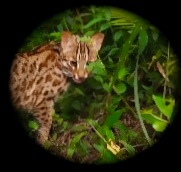
In the example photo, a Leopard cat is one among thousands of indigenous species. Other life forms include various mammals, birds, reptiles, and large insects. It's possible to research and catalog life living in the forest for various conservation programs. Photo of the Moon and mountains shot during the day with an iPhone camera and added fisheye lens in zoomed mode.

Saturday, September 29, 2018

Space1 Space Energy Cloud Study

Clouds command splayed solar energy power rays across the Troposphere
SPACE1 Has Big Eye on Space Energy
High above the Earth at the borderline encompassing the fringe of space that connects to the ring of upper atmosphere in plain sight is the greatest indicator of energy levels. Clouds clearly show the energy which can be ascertained by their study, of shape, movements, size and mass, content of vapor, rate of travel, acceleration or deceleration, direction of motion, density, reflectivity, barometric pressure, RH relative humidity, changing malleability, splaying or sectional concentration of sunlight, heat distribution, air pockets, turbulence, contortions and morphing. This energy is a good indicator of when to launch a rocket, and when not to launch. It can also predict weather and help determine the extent of seeing conditions for telescopic observation.

Thursday, July 20, 2017

Space1 Rocket Fuel Study

ROCKET FUEL STUDY
Given recent Summer heat and new Space1 regulations governing space ports, exactly what is the safe storage requirement for Space1 rocket fuel?

Studying at least four elements of rocket fuel, chemical properties, stability, reactivity, polymerization, compound, volatility, decomposition, and heat storage, tests reveal storage parameters of 32 deg. to 140 deg. F. storage or 0 to 60 deg. C. As a fueled rocket waiting on the launch pad in the Summer sun could potentially exceed 140 deg. F., it will be recommended to stop operations during these conditions. It is also recommended that using a new fuel will be more safe. There are conditions of fuel transport that are unregulated which could result in anomalies. As a result, by unanimous agreement, the board of directors vote to conduct Space1 operations with both new fuel and new engines.

Space1 Contact
http://space1usa.blogspot.tw/2017/06/space1-contact.html
Space1 Index
http://space1usa.blogspot.tw/2015/12/space1-index_16.html
Space1 Index Big Brain Site Prior to 2014
http://space1usa.blogspot.tw/2017/05/space1-big-brain-index-of-space.html
Space1 Home
http://space1usa.blogspot.tw/
Space1 Profile 2017
http://space1usa.blogspot.tw/2017/03/space1-space-profile.html
About Space1 from the Founder
http://humanoidolabs.blogspot.tw/2015/01/about-space1-from-founder.html


Humanoid Robots Home
http://humanoidslabs.blogspot.tw/
Humanoid Robots Index
http://humanoidslabs.blogspot.tw/2017/02/humanoid-robots-index.html

Big Brain Home
http://humanoidolabs.blogspot.tw/
Big Brain Index 1
http://humanoidolabs.blogspot.tw/2016/12/fill-brain-project-searchable-thread.html
Big Brain Index 2
http://humanoidolabs.blogspot.tw/2016/12/big-brain-web-site-index.html
Big Brain Timeline
http://humanoidolabs.blogspot.tw/2016/12/big-brain-timeline_1.html
Big Brain Contributions

http://humanoidolabs.blogspot.tw/2016/12/big-brain-contributions_13.html

Thursday, January 28, 2016

Space1 Touring Time

Time can change from one space location to another. Making time viewable and tourable is one goal at Space1.

Introduction To Tourable Time
In space, there are many fantastic touring sites of grandiose proportions, such as giant planets, cratered moons, and other solar system objects like mineral rich asteroids, messenger comets from the galaxy, and historical spacecraft dating back to the 1950s. Also existing are many special objects, like the blazing solar magnetosphere, the colorful and changing auroras, grand geysers of spewing ice, shooting stars, strange space bubbles, and the very essence of time.

Touring time is a new concept invented by humanoido of Space1. Space1 has a space lab in which time is studied and investigated. Generally, time is in motion, and can flow at varying rates. Space1 is studying the use of time to extend the length of space tourism and now become an object of tourism. There are different types of time. It can be a relative flux factor, relative to position, gravity, velocity, and the unfolding or folding of natural occurring events. The key factor in touring time is the ability to observe it as elemental and referential, viewing discerning and definable differences from other types of time.

Exactly what will be viewable and tourable in the zones of time? - watching the bending and shaping of time, seeing the change in the rate of time flowing, observing time slow down or speed up, watching the event time line unfold thus modified by changeable time, or discover new forms of time such as shifting timelines and the causality effects of objects such as gravity wells and the folding fabric of space-time? Perhaps it will be viewable outside of time portals at places where all time has stopped, which may be tourable in special ways. Space1 will continue to scientifically investigate, study, and experiment with the potential realm of tourable time.

Index
http://space1usa.blogspot.tw/2015/12/space1-index_16.html

Saturday, January 9, 2016

Space1 DARA

FOCUS ON DARA

DARA of Space1 has completed tests for phase 1 of the Fundamental Space Three Dimensional Systems Study. The systems study is the precursor to possible new space rocket suit technology, the potentiality of HUD heads up displays, and a rocket system that may usher in a new era of space tourism. Successful tests reveal that a calibration of mapping is primary for a successful system and spectroscopic quality for proper functioning is a prerequisite. Space1 is delighted to have Dara on the rocket team.

Space1 Index