Showing posts with label telescope. Show all posts

Saturday, December 17, 2022

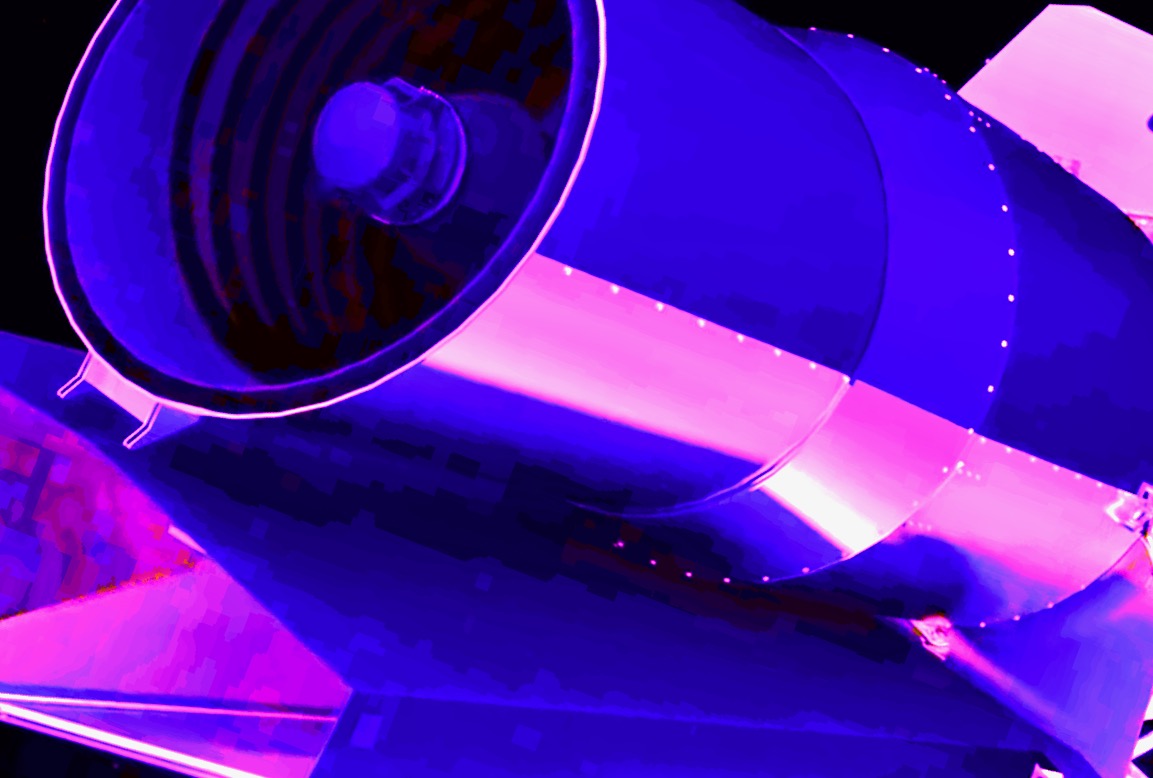
New Gold Hexagonal Telescope

The power of private industry - Humanoido of United Space Technologies unveils one of the most significant scientific instrumental breakthroughs of all time - the new terrene experimental Gold Hexagonal Telescope - comprised of gold plate hexagonal mirrors that make up the entirety of the multi-mirrored primary, for mind bending transparency into a far deeper wider range of spectacular wavelength celestial images, inclusive of optical and infrared, the latter for greater mystical appearing ongoing penetration into the cosmic web.

New Gold Hexagonal Telescope

December 18, 2022 - By now, most know of Humanoido's long history of creative telescope making, especially those folks following the vast number of Big Brain Technologies blogs over the past ten plus years. Now there's a new telescope in the agenda to compliment the most recent series of telescopes dedicated to observational observatories, including the famous Sun Baked Observatory. The new radical approach telescope is the novel Gold Hexagonal Telescope GHT. Parts to build the telescope have come from all over the world, in the latest crowning achievement designed to break through and penetrate the blinding infinite cosmic celestial web.

GHT uses EIGHT 1.0 software OS, an acronym for Enchanting Indigenous Gold Hexagonal Telescope Incursion Software Lite 1.0. Eight runs enhanced on an upgraded supercomputer power-prone Mac in extended power mode.

The idea to create the GHT Gold Hexagonal Telescope came from the success of the James Webb Telescope JWT, a professional telescope that cost 10 billion dollars and took 30 years to  make. In Humanoido's GHT project, both time and money are critical and therefore these two scales must be properly minimized proportionally to fit resources and lifespans. For rapid buildability, the software OS was adapted from Humanoido's Telescope Amping code, and transformed into EIGHT 1.0 Incursion software - Enchanted Indigenous Gold Hexagonal Telescope Incursion Software Lite 1.0.

The GHT is heavily purposed to measure and study vast intermittent spooky dynamic flux fields in particular sky regions of burning interest in order to better develop new ways to blast through the random cosmic shield, improve electrodynamic space travel, and enter the cosmological abyss with greater clarity.

Left: This design has a total of eighteen hex mirrors fit together to make up the primary mirror. From left to right there are five rows of hex mirror tiles. The final design includes the central mirror for nineteen mirrors in total. The aggregated mirror is substrate membrane affixed to the proper curve which is calibrated to a parabola by robotic means.

The differences between the JWST and the GHT are as follows:

* GHT has a Newtonian RFT design, of rich field focus, and not a Cassegrain design

* GHT is positioned from an Earth based observatory and not in space at a Lagrange point

* GHT uses many hexagonal mirrors commercially available that are kept in stock and won't take decades to create

* GHT is fully serviceable

* GHT will offer competition to the largest telescopes in the world

* GHT uses a polymer flex mirror, more easy to control and calibrate

* GHT is super lighter weight and more easy to manage and transport

* GHT is scalable by adding or subtracting hexangonals

* GHT has less complexity

* GHT uses EIGHT 1.0 Incursion software - Enchanting Indigenous Gold Hexagonal Telescope Software Lite 1.0 

A Lifetime of Telescopes
https://otisastro.blogspot.com/2022/05/a-lifetime-of-telescopes.html

Sunday, August 8, 2021

Telescope Battery for Mission Tracking

Telescope Battery for Mission Tracking

Humanoido has implemented a battery of tracking telescopes for upcoming space missions

Tracking telescopes include a wide range of apertures from about 3-inches up to a 14-inch catadioptric. Additional telescopes in the enhanced megalithic range include 925-inch and 1,400-inch aperture telescopes.

Styles include refractors, reflectors, schmidt cassegrains, and catadioptrics. Optical tracking telescopes are powerful enough to provide imagery on the spacecraft from launch to the entrance into deep space. Included are cameras and special mounts for guiding on spacecraft. There are roughly 20 telescopes total in the tracking battery.

Located on the far side of the Earth in the Asian Arena mid range to the equator, the tracking battery of telescopes look out over the Pacific Ocean where missions are launched, as seen in this globe map. Tracking telescopes have a wide spectroscopic range from the ultraviolet to deep infrared heat signatures.

Thursday, May 14, 2020

New Astro Blog

Astro Blog will detail the use of these two telescopes, a 9.25" and 14"
EdgeHD from Celestron.
Coming Soon! New Astro Blog

The exciting new future dedicated Astro blog is where you can partake in exciting astro details, projects and experiments!

Astro blog will include new ideas and techniques, observatory and equipment details for astro imaging the Moon, planets and/or deep sky objects. One major focus will include the penetration of clouds, less than ideal seeing conditions, and light pollution,. This includes increasing the quality of results and data obtained through smog, fog, haze, thin clouds, chemical air pollution, and minimizing or eliminating specific lighting such as LED, mercury vapor and sodium. The blog page may also include telescope, accessory and equipment reviews and hidden details revealed on the best astro deals worldwide. Astro blog may show results and details of what can be accomplished in the heart of the inner city when imaging through bright Bortle 9 skies with the highest levels of light pollution. Some interesting questions may include how to pole align when the North is blocked, and how to star calibrate the telescope when no stars are visible.

Saturday, May 2, 2020

Space1 Tent Observatory

The new tent observatory houses telescopes as large as a Celestron C14 Edge HD with a massive
CGX/L mounting and tripod. During days and nights, can be lifted up and off the telescope during
observing or the telescope can aim out the large roll-up zippered door. Photo shows the large size
with a 150 x 150 cm base and rose red color. The author is using the slightly thicker 190T blue
synthetic polyester 120 x 120 cm base which comfortably fits on a tiled floor of a high rise balcony
befit with a balustrade. Tie down straps are routed to the steel balustrade and piping.
Space1 & Singularity Observatory
New Tent Observatory
testing a new portable tent observatory for telescopes

During the heat of the day, the roof opens up
with semi-circular window to release heat. At
night, it helps to reach telescope thermal
equilibrium faster.
by Humanoido

Part of an ongoing expansion to the Singularity Observatory division of SPACE1 is a new tent observatory.

Sold at camping and sporting goods stores, the Singularity Observatory Tent Observatory SOTO is portable, opening up into a full observatory from a simple flexible folding steel pole that folds down after use.
About 5lbs, the portable tent observatory has a
flexible steel rod than folds up into a circle that
may fit under the arm.

Capacity
The tent holds or covers one telescope as measured for a full size Celestron C14-inch Edge HD OTA, which is 31-inches long, with a massive CGX/L equatorial mount and the largest Celestron tripod offered for this OTA. An even better fit is the Celestron 9.25-inch Edge HD with a 22-inch long OTA or other SCT. Remember to measure the mount counterweight when calculating size fit.
Remember to order the tent with the higher door, like the
two shown on the left. This will allow the telescope to
reach higher elevations when observing from inside the
tent.
Specifications
The tent is waterproof and has UV inhibitors for resistance to the sun. The tent is available in two sizes, small 120 x 120 x 190 and large 150 x 150 x 190 cm and is offered with different colors (camouflage, army green, orange, red, rose red, sapphire blue, luxury gold). The interior has a pouch which can be used like a small shelf for small lightweight telescope accessories. A strap near the top is ideal for hanging items, in particular a long flat lightweight poly pockets unit could be purchased extra and hold astro accessories.

Ordering
Originating from a camping sports company in Shanghai, China, the best part is the price - available for as low as US $16 online from AliExpress in China (before shipping). I had mine net ordered and couriered to a location in Shanghai, then hand delivered to me. Shipments to the USA could incur freight charges as high as $150 so shop around for a good carrier.

Construction
Made of 190T synthetic polyester, the weight is only 2.1 to 2.5 kgs (4.6 to 5.5 lbs) and one hand can move and position it. It has sewn in loops for attaching clips that can lead to tie down ropes, and a zippered door and windows. I prefer to use metal luggage clips for rapidly tying down and releasing the tent. Check with catalog listings as some tent colors are made from thicker weight material, such as blue sapphire. The large door opening can roll up and fasten with straps.

Applications
For use, the entire lightweight tent easily lifts up and off of the telescope as the bottom of the tent is open. After an observing session, just set the tent over the telescope and clip it down. The tent is lightweight and ideal for use on a deck. Depending on weather conditions, keeping it over the telescope is also a solution that could last several months. At the low $16 cost of the tent, it could easily be replaced every season.

Quick Covering
One use is as a telescope covering during a fast rain. Just quickly set the fully set up tent observatory over the telescope for protection.

Maintains Polar Alignment
Another use is to keep the telescope outdoors and covered after its aligned to the pole and star calibrated for precision GOTO.

Remote Imaging
The tent observatory polyester covering is transparent to WiFi signals so its ideal for remote imaging.

Good for Breaks
It also helps when using a telescope setup and you want to take a break at 4 am but don't want the telescope exposed to the weather. The tent is very handy to protect the setup throughout the night, when going inside for a quick nap, pause, cup of coffee, or intermittent breaks from observing.

Ideal for High Rise Balcony
A balcony may have a weight limit, as it hangs over the side of the building. After the weight of the telescope, a very light weight observatory covering is useful and necessary The light weight of only 5 lbs makes it ideal for setup on a highrise balcony and does not add any appreciable weight.

Observing from Inside the Observatory
Of course, if the object observed is visible through the opening, the tent observatory can provide a good sheltered place shielded from lights and wind.

Astro Imaging
It can also offer a suitable solution for astro imaging and remote control. It can make more nights usable for imaging by protecting against a strong breeze.

Daytime Shield
During the day, it will shield the telescope from the hot direct sunlight. The tent observatory will shield against sun, rain, wind, dust, lights and birds.

High Wind 
For those rare high wind events, typhoon or hurricanes, just fold the tent and bring it indoors with the telescope.

Observatory Door
The large zippered front door can be used like the bi-parting shutter doors on an observatory dome. It can partially open by folding over to one side the desired amount - good for stopping a wind or breeze. The door does not reach the zenith overhead, but this is ok on a deck with a partial roof. As the telescope is set closest to the front door, it has the largest viewpoint.

No Construction
No need to build this observatory - it comes ready to pop open instantly and assume its natural form. No tools needed.

Instant Setup & Takedown
No need to thread flexible supports and pipes like other tents. This tent is already constructed with built in flexible supports that "pop open" and just fold it to compress it down into its carry bag.

Portability
The tent observatory is ideal for a portable rig. It weighs almost nothing and sets flat when folded. Just fold up the tent and put it in the car along with the telescope and gear.

Fast Deployment
At the field site, it instantly pops open without any complicated assembly. No need to waste precious imaging time with rotating domes, opening bi-parting shutters, using motor drives or rolling off roofs.

Ventilation
The observatory has good ventilation as it can be regulated with the open bottom (no floor) or the window hatches at the top and side.

Caveat
The tent does not secure items inside from theft so it must be kept in a secured location or have eyes on it at all times. However, this may not be much of a problem for a secured balcony a thousand feet high off the side of a skyscraper. The tent is not permanent and not designed for high wind, but given  proper care it could potentially last years.

Wednesday, April 22, 2020

Singularity Observatory Covid-19 Delays

Singularity Observatory Telescope with Covid-19 Delays
The third massive telescope construction project in 2020 is significantly delayed by the Corona-19 Pandemic

Delays for the third telescope include orders that companies refuse to ship, indefinitely. This has delayed the third telescope project significantly, and work is being diverted to telescope number two (the 1,325-inch diameter monster). Many of the design features of the potential third telescope are now being designed into the second telescope. Telescope two has all but one of the accessories needed for full operation using new technology in 2020.

Sunday, March 22, 2020

Singularity Observatory Mars Prep

Taking mother and baby telescopes out of storage for the new summer apparition for the Moon
and planets - a Celestron C14 Edge HD and Celestron C9.25 Edge HD both with the newest
ultra enhanced coatings that increase apparent diameters of 14 and 9.25-inches. The F/10
FRs are ideal for Lunar and Planetary study, including the entire Mars Opposition. The 9.25"
scope will get the same super heavyweight and stable Celestron CGX-L Equatorial 1400
EdgeHD GOTO computerized mounting with 75-lb capacity, StarSense Auto Align and
SkyPortal WiFi Module. The mount has a very large 144mm diameter worm wheel for
exceptional guiding and tracking. These are the only two documented telescopes that
Celestron professionally reworks optically to exacting precision specifications above and
beyond that of standard commercial telescopes.
Singularity Observatory Mars Prep
Summer is here on this side of the Earth. Telescopes are being awakened at Singularity Observatory by Humanoido, Observatory Director and Founder

Now at only 6" of arc in diameter in the early morning sky, Mars is but a tiny dot moving closer to the Earth, culminating in a close approach opposition in October where it will reach about 23" in diameter. There is always the risk of global wide dust storms so there is no guarantee as the clarity of surface features for mapping.

2020 Mars approach details - it's unknown if the days of closest approach will end up with
a massive global Mars dust storm like two years ago, but as Mars seasonally warms up and
the polar cap melts, one can expect turbulent weather and storms to occur.
Skies in the Pacific are clearing, as today has a slight haze cast - frequently superior for observing planets with results similar to that through a filter that increases accuity and visibility of planetary features.

This year, the observatory has installed large storage units for telescope equipment during day night observing. Also visible near Mars, are Saturn and Jupiter, ideal for honing this years observational and imaging techniques with new equipment.

Humanoido is currently starting up the C9.25-inch Edge HD telescope and the C14-inch Edge HD at the Pacific installation. As the distant mountains come into clear focus, many new discoveries are expected with the ultimate sky clearing.

Singularity Observatory Indoor Observing Success!
https://space1usa.blogspot.com/2019/03/space1-singularity-observatory-indoor.html

Tuesday, March 10, 2020

Singularity Observatory Remote Mountain Study

The author has developed a remote and safe way to study wildlife and fauna in the mountains of
Taiwan from a safe distance. Trekking on the mountain in person and exposing one's self to
wild predators is extremely dangerous including the possibility of being eaten by a wild black
bear.
A Study of Remote Mountain Wildlife and Fauna by the Repurposing of Aplanatic HD Schmidt Cassegrain Amped Catadioptrics

by Humanoido @ Singularity Observatory & SPACE1 Industries

Like the unperturbed evolution of wildlife on the Galapagos Islands, it’s imperative to safely study the ecology of jungle forest mountain wildlife and fauna within the Arpeggio Mountain Pacific Rift without disturbing surrounding ongoing evolution.

How to conduct a useful scientific study without actually trekking into the dangerous and treacherous mountainous regions and disturbing the pristine footprint of millions of years of ecology?

The author has developed an inventive application to monitor mountain vegetation and wildlife from a distance of up to twenty or more miles away depending on conditions. The instrument is a modified and enhanced catadioptric with an amped aperture over 1,400-inches in diameter. The program includes studies of animals, insects, birds, reptiles, plants, aquatics and any species within the instrument’s resolution at the time of given atmospheric conditions.

The conservationist program is conducted by Humanoido from a distance of about ten miles. The instrument is optically driven with multiple surfaces of fourth order differential curves, amplification equipment, dialectric filtering and specialized oculars. The obs recording device is a specialized Deep CCD array with a high density multi core receiver for Tb data. The gathered data is then fed into a mating reciprocating machine - the Reciprocal Image Determinator, that enhances results.

The system includes the following programs of tremendous importance:

* The variety of plant and animal species are recorded and counted
* Forest Jungle densities and habitats are determined
* A determination is made for species counts as to whether the subject is going extinct or nominal in population
* New species are discovered and cataloged
* The evolution of jungle and forest is recorded along with any precipatating changes
* Activities of corresponding weather, seasonal conditions and changes are recorded
* Forest Jungle locations are noted for their densities of land, jungle vegetation, and animal density and types
* Mountain cartographic divisions are mapped out to specifications

Given the setup of the system, trekking into the mountain by proxi with the technology is convenient and completely safe from poisonous spiders, snakes, killer wasps and bees, stinging army ants, poisonous beetles, harmful Komodo dragon Monitors, alligators, leeches and slugs, fungi and bacterial diseases, deadly virus mitigations, and other killer species. The system is convenient, and can be conducted from an outdoor deck or free open area in line of site to the Pacific mountain range.

Monday, February 17, 2020

Singularity Observatory XTREME Artificial Planet Telescope XAPT


Singularity Observatory and the XTREME Artificial Planet Telescope XAPT

XTREME planets are observed through special high technology telescopes like the upcoming XAPT XTREME Artificial Planet Telescope that tracks various trajectories, infinitesimal geometrics, and evo time compression periods.

For observations, the XTREME artificial planet requires a special vision and tracking telescope that can see through the window of  compression space time, amplify geometrics of the infinitesimal, and penetrate the planet's crust with radio communications. Known as the XTREME Artificial Planet Telescope XAPT, there is only one on the lab design table at Singularity Observatory. When complete, it's destined to become the principle vestibule to keep in touch with the artificial planets of space colonization.

Tuesday, November 12, 2019

Space1 New Micro Telescope

Relative dimensional quality of the new Space1 Micro Size Telescope is smaller than the above dot
Space1 New Micro Size Telescope
Work begins on refinement of the alt mirror size equivalent of Singularity Observatory' largest telescope in the world. The completed new prototype telescope is already has the title of the Worlds Smallest Space Telescope, waiting for its first trip into space on board a SPACE1 Super Rocket.

Everyone may be familiar with the massive and largest Amped telescope in the world, inspired by joint ventures of SPACE1, Singularity Observatory, Astronomer Humanoido and other resources. Now consider the complete opposite, a telescope so small yet so immensely powerful, it can launch on board the smallest and lowest cost reusable space program industry super rockets.

Dubbed the Small Systems Space Telescope SSST, it's the opposite in size of the world's largest telescope. With a development code name of MST Micro Space Telescope, the SSST is a hinge work based on the reliable color space telescope developed by Humanoido for space launches in SPACE1's Safety Rocket. SSST, the smallest telescope in SPACE1's venture is designed to launch inside the payload section of the new Super Safety Rocket and deploy as determined. MST Micro Space Telescope is an optical telescope with support components to extend its range. By making a lensing change, the telescope can see into the deep infrared for scientific studies. The small size of the telescope is ideal for launching inside the smallest and most powerful rockets. The telescope which has extreme light weight and dimensional stealth capabilities for potential National Defense applications, will also have Amping technology to extend its apparent inch diameter capabilities from minuscule to massive by factors of 10x and 100x. This is more powerful than all known previous small telescopes created that did not have access to powerful new Amping technology from Singularity Observatory.

HSO Largest Amped Telescope in the World
Space1 Rocket Space Telescope
https://space1usa.blogspot.com/2019/10/space1-rocket-space-telescope.html
Space1 Industries Color Space Telescope

Thursday, October 31, 2019

Space1 Rocket Space Telescope

Super Space Telescope
SST Prepared for Launch
Breaking SPACE1 News! Sat. Oct. 26th, 2019
Taking telescope images from the Super Safety Rocket during flights is being attempted with the first mobile airborne rocket digital super space telescope system developed by SPACE1.

July 17th, 2013 the Tiny Space Telescope images
the Sun and surrounding objects during
Humanoido's launch into space.
As a backup or supplementary fleet of telescopes, parts inventory exists to build up to five basic space telescopes, and ten advanced design telescopes, each of which may vary in design and purpose. This is the first digital space telescope series designed to explore space from SPACE1 Super Safety Rockets in real time.

Historically, Humanoido created space telescopes since the 1960s when his first all plastic unit captured the Moon on Tri-X roll film. This telescope evolved to a refined homebuilt 4.25-inch diameter reflector to be a part of NASA's Getaway Special as launched on the Space Shuttle. Then Humanoido leased spacecraft and took his high resolution space telescope into space. The next time a space telescope was built, it was for the SPACE1 Industries program.

The updated refracting telescope design uses a main electronics printed circuit board with control panel, camera drivers, communications circuits for downlinking and streaming data, channel transmitting options, up to 72 space channels, a telescope transmitting antenna, low noise power supply with Lithium Ion technology, protection circuitry, insulation, and programmable power options. The SST has its own telemetry system. Operating in HD at 740P, the color telescope is capable of digitally saving data, transmitting data to the Earth, or saving and transmitting data at the same time for redundancy and greater preservation of data.

— the Super Space Telescope is a power eye that sees all! — 

— the color telescope shoots from the Super Safety Rocket through the celestial viewport window —

All telescope are being outfitted with high quality precision optical quality  ground and polished glass primary objective lenses powered with digital CMOS sensors. The upgraded telescope has an advanced operating system. Super Space Telescope Operating System STOS can set menu items on display kept on board.

Super Space Telescope Features
at a Glance
* Self Contained
* Interchangeable lenses
* Precision Optics
* Color Detector
* Precision CMOS
* Extended Range
* Super Telemetry
* High tech PCB
* 78 channels
* Wide bandwidth
* Super recorder
* Photos and Video
* Variable size
* Programmable
* Self keyboard
* Variable Power Supply
* Memory
* Precision HD

https://humanoidolabs.blogspot.com/2014/01/space-telescope.html
https://humanoidolabs.blogspot.com/2013/08/near-space-launch.html

Saturday, July 27, 2019

Singularity Observatory Telescope Visual Treat

M27 Example - Small, medium, and large telescopes perform like the world's largest telescopes, or better, when enhanced by Humanoido's Amping process. Now, for the first time, Humanoido takes you through the eyepiece of the telescope to visually see the remarkable transformations happening with space and time. It's a feast of glowing spectacular color, vast outcroppings of blazing interstellar dust and matter, and a far deeper penetration into the great enigmatic abyss of space-time that holds trillions and trillions of stars and objects.
Telescope Visual Treat
Ever dreamed of looking through a 1,325-inch diameter telescope? Singularity Observatory in combination with Humanoido are making this possible for the first time.

Check the link below, showing the before image from a standard telescope (inset) and then the amped telescope version of the same object. The results are mind boggling.

Before and after (click on this image for proper size)
https://blogger.googleusercontent.com/img/b/R29vZ2xl/AVvXsEjIO8PL6W0dp9m0asmK-u051ubMJb-OONABi3hM1aYFRFdP-AW-9lb2lizuIBFoGJouFUBrZrhD1BGrbDpK9ZBfjKzDZ35i3W4rzpexIHlhaRQfq2ZFQZWRMgJdP_7feFr-tk9PT4zE5SIZ/s1600/slow+fast+star+field.jpg

Friday, July 26, 2019

Singularity Observatory Telescopes in Earthquake

Earthquake Telescopes
Take a Massive Royal Beating!!!
It was shocking at how hard mother nature shook the steel and granite observatory complex as its contents were beaten and slapped around during the recent earthquake that affected the entire pacific ocean volcano.

Lucky no tsunamis ensued. However, how did the new telescopes at Singularity Observatory hold up during a number 6.2-7 earthquake which shook the largest and massive steel and granite observatory like it was child's play?

Two telescopes were affected by the quake. One telescope, the largest and most heavy, was shaken like all hell broke loose. Due to the combined tonnage of telescopes, you cannot grab it or it would be extremely dangerous - all one can do is hang on for their life to keep from being thrown overboard, above and beyond the steel rail guard and down to impact, splat, upon the hard earth thousands of feet below. Of course let's hope the telescopes stay put as well and don't topple overboard. But something very strange and eerie happened during this event.

— "Let's hope we don't slide into the ocean!" Shouted Humanoido who used all his strength to hold onto the observatory' built-in laboratory instrument bench! —

Takes a licking and keeps on ticking? The largest 1,800-inch diameter telescope (46 meters wide or 151-feet) was held to the observatory foundation by its own sheer tonnage weight and it's judicial placement onto the anti-vibration device, which apparently helped stabilize the telescope in one place. This device came directly from high technology and rocket science. Observatory Director Humanoido measured the skid of the telescope mounting relative to the anti-harmonic device on the observatory foundation and discovered something very strange. There was no recorded skidding! This absorption of vibrations by the physics of harmonic control saved the telescope.

What about the big baby?  — this telescope is a megalithic monstrous 1,325-inches in diameter, weights about three times less than big brother, and was temp stowed in a possibly precarious vertical position. Did it topple, slide, crush, fold, skew, dent, crack or break? The big baby survived as well, not from the installation of any anti-harmonic device, but only due to a special material thick cover plate that was equal and opposite to the ceramic mount foundation with an extreme linear coefficient of sliding friction. This mechanical friction gripped and held the telescope in one basic position not allowing it to significantly or measurably slide. If it slewed yonder, momentum might throw it into oblivion and/or shatter its precision multiple fourth order differential glass surfaces into millions of shards. Luckily that did not happen. The 1,325" or 34-meters telescope (112 feet wide) remained safely parked, eagerly awaiting its next sky mission.

https://space1usa.blogspot.com/2019/03/space1-rocket-antivibration-device.html
https://space1usa.blogspot.com/2019/03/space1-anti-harmonic-devices.html
https://space1usa.blogspot.com/2019/03/space1-rocket-antivibration-device.html
https://space1usa.blogspot.com/2019/04/space1-big-earthquake.html

Wednesday, July 24, 2019

Singularity Observatory Humanoido Musings

Story of the Growing Telescope
by Humanoido

It was not too long ago that I was a very young kid, designing and building my telescopes to create affordable scientific instruments for serious astronomical programs. I went through a cycle of small to larger telescopes, a 30mm, 4.25", 8", 12.5", 40" and 50". In time, and with a one room studio apartment and all the space constraints that go with it,  I was forced to invent a massive aperture adjunctive space telescope using recycled NASA parts in space. Using high technology, the largest space telescopes were made from concatenated adjuncts, bringing up diameter designs equal to miles in aperture. These were the greatest days of invention and discovery. http://humanoidolabs.blogspot.com/

Where do you go from there? Let's go to the future. After a half century had passed, new technology appeared and I could now take advantage of inventing a process which I named Amping. Layers of very advanced technology amplified a telescope by factors of 10x and 100x. With large enough base telescopes, I could now create the largest Amped telescopes in the world. On the first night out, before and after images showed the most spectacular results, mind boggling and beyond my wildest imagination using the 1,325-inch diameter telescope. This proved the reality and potential of these massive technology telescopes were well within my grasp.
https://space1usa.blogspot.com/2019/03/space1-singlularity-observatory.html

With 1,800-inch and 1,325-inch telescopes, I founded Singularity Observatory and moved to a new very isolated location, solely dedicated to telescopes. A good telescope needs a good sky with the best seeing conditions in the world, and this is when I relocated science labs and observatory to a volcanic island in the Pacific Ocean. The telescope story continues today, though the young kid is grown and one could say I'm more at the short end of the stick than not. However, this short end, being short, is also concentrated and rich with fantastic capability and an accumulated lifetime of spectacular knowledge and information. For the most part, we can do just about anything in science and technology. So this is where the story begins once again.

Tuesday, July 23, 2019

Singularity Observatory Big & Little Brother Monster telescopes

Smaller 1,325" 34 meter telescope exampling illustration
Monster Tele-scopes
Largest 1800" 46 meter telescope exampling illustration
These two massive giant amped telescopes, sometimes referred to as Big & Little Brother, compliment each other in spectacular ways. The smallest is 1,325-inches in diameter and the largest is 1,800-inches.

How do you handle such large monsters with limited space at Singularity Observatory?

The Observatory is under restructuring to handle both monster telescopes. As the smaller 1,325-inch diameter telescope is just completed, it's being prepared for the official celebration of First Light and the relocation to the Astronomical Gateway of the sky. This gives the 34-meter wide small fry telescope up front priority, first in queue, as the larger 46-meter big fry waits its turn. Who owns twin 34 and 46-meter telescopes? Previously the largest were only 10 meters (Keck1, Keck 2, HET), though amping is a relatively new process. Singularity Observatory technicians and construction workers are clearing land to make full space for the new giant telescope, a process that might be completed by the end of the week. Also being prepared is the new shielding against the harsh sun which reaches up to 120-deg. in the shade during the peak summer. A second new lighter weight shielding will initially be in place for more tests.

Exampling 34-meter Telescope Spectacular Performance
https://space1usa.blogspot.com/2019/03/space1-singlularity-observatory.html

Sunday, July 21, 2019

Singularity Observatory New Telescope

Singularity Observatory Explodes with a Second New Telescope!
One year has passed by since the install of the most massive and largest 1,800-inch diameter T1 telescope ever owned or built by Humanoido and Singularity Observatory. Performance with the Amped mode has outstripped anyone's wildest imagination! This month, Singularity Observatory announces the official completion of a second very powerful amped telescope, the super powerful 1,325-inch.

T2 telescope begins full operation, after running a series of tests with fantastic mind boggling results (see link).

Two telescopes are mated to work in tandem. Telescope number two, or T2, is also stand alone, and can perform from the Observatory Skyway with full clearance from obstructions during accelerated automatic GOTO modes and unanticipated autonomous AI movements. T2 has similar amping modes and can share accessories with T1. Both Singularity Observatory telescopes share their new joint location at the privacy and clear skies of Star Mountain on the volcano in the Pacific Ocean.

1,325-inch Diameter Telescope
https://space1usa.blogspot.com/2019/03/space1-singularity-observatory-1125.html
Observatory Ramp Up
https://space1usa.blogspot.com/2019/03/space1-singularity-observatory-ramp-up.html
Telescope Gone Wild
https://space1usa.blogspot.com/2019/03/space1-singlularity-observatory.html

Monday, June 17, 2019

Singularity Observatory Fastest Telescope Alive

The initial FR reduced image of the Moon,
white portion, is obstructed by the secondary,
black circle. The gray area represent the EP.
Singularity Observatory
Making the Fastest Telescope Alive FTA

Breaking News - Wednesday, March 27, 2019, by Humanoido

Radical Experiment: Create a spectacular mind numbing speed so fast that the imagination could conjure up burn holes in the detectors!

Speed in a telescope is basically the same as speed with an optical camera lens. As the focal length becomes shorter, the images smaller and brighter.
Showing the full FOV with 2-FR & EP.
The FRs image is corrected to eliminate the
secondary obstruction using mechanical
and image processing means. The test took
place during the early morning hours of
Wednesday, March 27, 2019. Imaged with an

iPhone Xs MAX at f1.8 Telescope at f1.6.

Telescopes with long focal lengths, such SCTs and Aplanatics are usually native F11 making the telescopes slow and not conducive to deep sky imaging. However the long FL with large image scale is ideal for planets. But what if you have a long FL slow telescope and want speed for DSO explorations?

Some telescopes, such as the Celestron EdgeHD, can transform with a very expensive third party lens that attaches to the front of the corrector plate, in which some view as a delicate and time consuming operation. It transforms the telescope from f11 to f2.

— this is the greatest thing to come along for owners of EdgeHD telescopes who want to inexpensively do deep sky imaging and conduct wide field surveys of selected objects —

Humanoido has taken some simple lenses and created the ultimate fast telescope from f11 to f1.6 speed. The trick is to find focal reducers without optical corrections figured in for making a more flat FOV. This is because the mentioned telescope is already corrected for a flat FOV.

In this case, two FRs were stacked in one direction after the visual back and before a Star Diagonal, and coupled to a 55mm EP with a two inch barrel. This initially resulted in an obstruction by the image of the secondary. Through special iPhone imaging at 1x, the obstruction was negated to create a lunar image. However, the 14" f1.6 combination is so incredibly fast, the Moon is hopelessly overexposed and even the new iPhone camera could not exposure correct it.

However, the focus was at the one end limit of the telescope and the good news is the iPhone made up the focus distance automatically. This makes the process fully useable although the secondary obstruction must be negated by one method or another and in the case of the Moon - the exposure regulated by neutral density filters. More experiments show the focus is sharp all the way to the edge of the FOV making the experiment very successful and usable for deep sky imaging with a converted f11 to f1.6 telescope. The experiment can be applied to large sky areas, the changing positions of Jupiter moons, deep sky, asteroids, comets, and other objects.

Experimental Hardware FTA
1 - Celestron 14" EdgeHD
1 - Stock Visual Back 2"
2 - FR Coated wo Correction
1 - Stock Star Diagonal
1 - 55mm Coated EP w/2" Barrel
1 - iPhone Xs MAX
1 - iPhone Built-in f1.8 Wide Angle Lens

Cost Savings
The commercial F2 Hyperstar is $1,400 for a 14-inch telescope. How does this compare to Humanoido's FTA approach? Numbers show the FTA cost is over three times less expensive which is $996 less money.
2 - FR = $80 ea. = $160, 1 - 55mm EP = $244, Total $404
Hyperstar 1400 - FTA 404 = Total $996

Saturday, June 15, 2019

Space1 Rocket & Telescope Technology Merge


The Next Generation of Technology Merges Rocket & Telescope

by Humanoido
Breaking News Friday March 22, 2019

SPACE1 and Singularity Observatory are uniquely cooperating on a mega space project of great technology - an invention that combines the space Safety Rocket with the Giant Space Telescope, creating a multi symbiotic union of tremendous technological uniqueness.

How can you merge rockets and telescope optics to create a craft of space so technologically advanced that it can symbiotically push forward the frontiers of space exploration? Humanoido, Founder of SPACE1 and Director of Singularity Observatory has invented the next generation paradigm space technology.

Not yet named, Humanoido's Space Symbiosis invention comes together with a span of approximately fifty unique scientific technologies, and takes space exploration to an entire new level, a paradigm of the century.

Conventional space programs take decades to complete, and sometime centuries. One example is the NASA Moon mission that took at least ten years to complete, and the human Mars landing is still in the planning after 70 years! How many people died of old age, waiting to see astronauts land on Mars or humans return to the Moon?

NASA was founded July 29, 1958. Back in the 60s, Dr. Werner Von Braun worked for NASA and outlined a workable Mars landing with details, however the government run space agency failed to receive appropriate funding from Congress.

The new Symbiotic Space Program can complete feats in the ultra short term. Already Moon and Mars missions are in the planning within this year, and the next year or two. Stay tuned here as reports will unfold regarding the symbiotic space craft and its first manned missions into the Solar System.

For continuing information, follow this blog. Materials are available from Humanoido, SPACE1, Singularity Observatory, United Federation of Spacefaring Species, Humanoido United Laboratories, and United Space Technologies.

https://humanoidolabs.blogspot.com/2019/03/big-brain-artificial-minds-contribute.html

Wednesday, June 12, 2019

Singularity Observatory Live Astro Photo

Singularity Observatory
Capture a Live Astro Photo

by Humanoido

It's alive!!! Apple has introduced several new iPhone cameras and software that changes everything when it comes to taking a photo and doing astronomical imaging! It's called Live Photos and the reality of this new kind of photo is it holds enough photos to make a 1.5 second video and has many other useful tricks.

This is a spectacular boon for astro imaging the Moon and planets as a single best shot can be chosen or several best shots extracted and summed into one more perfect image. It's one way of shooting through those pesky sky conditions when the blurring atmospheric seeing conditions clear for only a fraction of a second. Doing Astro Live Photo imaging changes the game for the better, making imaging through your telescope far more easy. It can sidestep the other lengthy procedures of image processing.

What is Live Photos?
Live Photos is an iPhone camera feature that brings your photos to life by creating a moving image. Instead of freezing a moment in time, you can now capture a Live Photo with movement and sound. iPhone Live Photos can be converted into stunning long exposure images. A Live Photo captures 1.5 seconds of video and audio both before and after you press the shutter button to take a photo. As well as a high quality still JPEG image, you also get a 3 second Live Photo with sound. When you play a Live Photo, you don’t see the still image that you took when you pressed the shutter button. Instead, you’ll see a 3 second moving image. When you shoot a Live Photo, the iPhone also captures a still image. This lets you relive those moments before and after you took the photo.

Phones and OS Working with Live Photo
You can only shoot a Live Photo with the iPhone 6s/6s Plus or newer. But you can share them to older iPhones or an iPad as long as that device is running iOS 9 or later. The Live Photo feature is available on the following iPhones:

iPhone 6S and iPhone 6S Plus
iPhone 7 and iPhone 7 Plus
iPhone 8, iPhone 8 Plus, and iPhone X
iPhone XS, iPhone XS Max, and iPhone XR

How it Works
How does the iPhone know to record video for the 1.5 seconds before you press the shutter button? With Live Photos enabled, the built-in camera app starts recording video as soon as you open the app. So when you press the shutter button, your iPhone has already captured the 1.5 seconds before the shot. It saves this footage along with the 1.5 seconds following the image capture. Your iPhone discards all other video footage captured before and after those 1.5 seconds. So you don’t need to worry that the constant video recording will fill up your iPhone’s storage.

How To Switch On Live Photo
Start by opening the built-in camera app, and set the shooting mode to Photo. You can’t shoot Live Photos in any of the other shooting modes. The Live Photos setting is the round icon shown on the top of the screenshot below. If the icon is yellow, Live Photos is on. If the icon is white, tap it once to turn on Live Photos.
Live Photos is on by default, but you can switch it off at any time by tapping the yellow Live Photos icon. When you switch on Live Photos, the word “Live” appears in a yellow box as shown. This will disappear after a couple of seconds.

Video Starting
Remember that the 1.5 seconds of video starts before you press the shutter button. So make sure you compose your shot and hold it there for a couple of seconds before you press the shutter. If you don’t do this, the first part of your Live Photo will be of you moving the camera to frame the shot. Likewise, your iPhone will record video for 1.5 seconds after you’ve pressed the shutter. So make sure you keep your phone still for a couple of seconds after taking the shot.

Live Photo Audio
Live Photos capture audio as well as video. So you’ll hear any sound in your Live Photo when you play it back.

Turn Off Live Photo
When you no longer want to shoot Live Photos, switch off the Live Photos feature so that the icon turns white.

How to View on an Older iPhone Model
View Live Photos on an older iPhone, iPad, or iPod touch that can run iOS 9 or later. Find the Live Photo you want to view. Touch and hold the photo to animate it.

How to view Live Photos on a newer iPhone model
View a Live Photo on Apple's current-generation iPhone models, see list. Launch the Photos app from your Home screen. Find the Live Photo you want to view. Press firmly on the photo to animate it. It will blur for just a second and then start to play.

Storage
Live Photos take up a lot of storage space on your iPhone. So if you leave it on for every shot you may find that your phone becomes full.

Processing
Processing your live images is easy with Apple's free Photo, a program on iMac computers and an app on iPhones. You can edit Live Photos in the Photos app in a similar way to editing still images. For Live Photos there are some extra editing tools. When you open a Live Photo, tap Edit at the top right of the screen. The editing tools will appear. Crop and rotate, apply a filter, or make lighting and color adjustments. The wand icon is an autocorrect option for enhancing exposure and color with a single tap.

Change the Key Photo
You can change the key photo (the one you see in your photo library) using the slider at the bottom of the screen. Move the slider until you find the image you want. Tap Make Key Photo to confirm your choice: A white dot will appear over your chosen photo. A grey dot appears over the original key photo in case you ever want to go back to it. When you’ve finished editing your Live Photo, tap Done to save the changes. If you want to remove the editing you applied, you can revert back to the original Live Photo at any time. In the Photos app, find the Live Photo you want to revert, tap Edit, then tap Revert. On the message that appears, tap Revert to Original. Another option under the Edit facility is to switch from a Live Photo to a still image (without making any edits). When you’re viewing a Live Photo, tap Edit, then tap the yellow Live Photos icon to convert it to a still image. The icon will turn white to show that it’s no longer a Live Photo. Tap Done to confirm.

Special Effects
Since iOS 11, you can apply three special effects to your Live Photos: Loop, Bounce and Long Exposure.

Long Exposure
The Long Exposure option creates a photo with a slow shutter effect. It overlays all the video frames from your Live Photo to create a single image. Long exposure with scenes that include movement will blur the motion. With a telescope, make sure tracking in on and the image is ultimately stable. This ensures that the stationary parts of the scene remain sharp in the final image. Long exposures should lessen image noise.

Turn a Live Photo into a GIF
There's no longer the need for a GIF creator app. You can do it all right in the Photos app! Launch the Photos app from your Home screen. Find and tap the Live Photo you'd like to turn into a GIF. Swipe up on the center of the screen to reveal the animation options. Tap Loop if you'd like to loop the Live Photo as a GIF.

How to Extract a Still Shot from a Live Photo
If you want the still photo only, you can make a copy. Open the Photos app. Select the Live Photo you want to extract a still shot from. Tap the Share icon in the bottom left corner of the screen. Tap Duplicate in the option tray at the bottom of the screen. Tap Duplicate as Still Photo. A copy of the still photo will appear in your library right next to the original Live Photo. You can delete the Live Photo if you no longer want it to take up storage on your iPhone.

Links
https://support.apple.com/en-us/HT207310

Monday, June 10, 2019

Singularity Observatory Focal Reducer

Singularity Observatory
Focal Reducer Experi-ment

The Celestron Focal Reducer is a great product, designed to change a telescope from f11 to f7. It simply screws into the visual back of an SCT followed by the star diagonal and eyepiece.

by Humanoido

This means more of a large object like the Moon will fit into the field of view when looking through the telescope's eyepiece. Exactly how much more of an object, like the Moon, is visible with the Focal Reducer in place? This experiment will qualitatively determine that result.

Results are shown at the left. The top image highlights the Moon imaged through the eyepiece without a focal reducer. The Moon has a much larger image scale and does not fit into the field of view. Below, the image highlighted was taken with the focal reducer in place. The Moon just fits into the field of view. The focal reducer is one that offers edge correction for SCTs that are not already corrected. Telescopes like the EdgeHD are corrected to the edge and Celestron does not recommend using this focal reducer. However, it works well, and the author bought it for CCD use which covers only a small center area which is fully corrected. All in all, the image is rather good at the edge, even the focal reducer was not recommended.

Keep in mind this experiment was performed with the supplied Celestron stock 23mm eyepiece which appears to add color fringing aberrations with or without the focal reducer. Also, the hand held iPhone Xs Max camera adds numerous lenses into the optical train which may cause reflections, differences in lighting and focus issues depending on the orientation.

Celestron 14" f/11 EdgeHD CGX-L
Celestron Luminos 23mm FL Eyepiece 2"
Celestron Star Diagonal
Celestron Focal Reducer f/7
Apple iPhone Xs MAX

*Image experiment on Thursday evening, March 21, 2019 at 8:05 pm local time, through clouds and haze, camera was hand held, no drive, shot indoors looking out to the sky view

https://space1usa.blogspot.com/2019/03/space1-singularity-observatory-indoor.html

Sunday, June 9, 2019

Singularity Observatory Indoor Observing Success!

Indoor Celestron 14" EdgeHD CGX-L telescope lunar imaging through an opened deck door.
The Moon is seen up about 45 degrees elevation in the sky, and left of the OTA
Moon by Humanoido, imaged Thursday,
March 21, 2019 at 8:05 pm local time.
EdgeHD 14" telescope, Celestron FR, stock
23mm 2" EP and star diagonal, hand held
Apple iPhone Xs MAX, imaged indoors, single
image, processed with Photo, corrected for
EP achromatic aberration, air pollution, and
light pollution.


Singularity Observatory
Successful Indoor Lunar Observing
with a Big Telescope

by Humanoido

Breaking News
Thursday March 21st 2019

I was surprised the immense massive and heavy Celestron 14-inch EdgeHD CGX-L telescope fit inside the home fully assembled, with three counterweights and castors on the feet to provide more resting surface area so as not to crack or mar the ceramic floor. The EdgeHD 14-inch is the largest telescope manufactured by Celestron Company and also the most expensive. It's important to get full use from this telescope with as many convenient observing programs as possible, even if the telescope must sometimes remain indoors for work on both day and night programs. During the day, the scope observes the forest jungle for wildlife conservation studies and runs experiments in optics and telescope dynamics. The telescope is also useful for tracking SPACE1's rocket launches and various space missions.

The top of the OTA just cleared the ceiling by about 2-inches, certainly a stroke of luck. The telescope room has a lowered ceiling to make space for a sleeping loft. Just a few days earlier a plan was outlined for operating the telescope from indoors while peering through the opened deck door.

https://space1usa.blogspot.com/2019/03/space1-singularity-observatory_20.html

This was a quick experimental setup because the entire day was heavy overcast, and suddenly shortly after lunar rise time the haze began to dissipate and it was time to scramble to get set up with the new telescope and accessories. First off, the door was opened to the outside for an hour to achieve thermal equilibrium. The heat was on in the 85 deg. F. weather. Humidity was pushing 96%. The image of the Moon barely fit into the telescope's FOV after a Celestron FR was attached to get around f/7. The OTA needed precise positioning so at not to engulf the door frame. Only one photo was lucky enough to capture the entire Moon because the Moon was framed right up to the edged of the EP. The camera used is an iPhone Xs MAX in auto exposure mode, hand held in front of the EP (a very taxing and difficult process) for the afocal method of projection with a supplied Celestron 23mm 2-inch. No drive was running at the time and the telescope was moved by hand. The polar axis was only rough aligned with a compass. Images were shot through clouds, haze, strong air/light pollution. As the hour progressed, the telescope protruded into the door frame and obstructed the images.

This provides a lot of wiggle room for the future to obtain much higher resolution results. A portable smart phone mount is on order for the bionic phone, higher quality EPs, two FRs without field correction, and soon the CCD imager system will be setup with the computer along with the drive cabled to power the mount at the exact computed lunar rate. One thing noticed is the sky opening covers the exact area where the Moon passes by frequently in the springtime and is the same area where the planet Mars hovered during the 2018 opposition, and more recently Venus made an appearance. The sky-view has a peak elevation around 45 degrees facing East Southeast. The area could also catch Jupiter, Saturn and other objects with the correct timing.