Showing posts with label tourist. Show all posts

Sunday, October 20, 2019

Space1 Free Space Tourism

SPACE1 Blasts the Space Race with a Shot of Free Space Tourism
The cost of reusing the SPACE1 Safety Rocket is negligible and almost free. SPACE1 Owner & Entrepreneur Rocket Scientist Humanoido has stated that tourists may ride for free, for an undetermined time period.

Traditionally space tourism is extremely expensive, a venture affordable only by the richest. SpaceX Elon Musk has said it could cost $200,000,000 dollars for a trip to Mars. Mr. Branson of Virgin Galactic states the cost of going into space briefly will cost $250,000.00 and Russia will rocket you to the space station for a mere 60,000,000.00 to 80,000,000.00. Space tourists pay between 20,000,000.00 and 50,000,000.00 dollars to stay onboard the International Space Station ISS. There are numerous other space companies charging space tourists millions of dollars, yet none can deliver customers into space. A goal of SPACE1 set by Owner and Space Entrepreneur Humanoido is to reduce the cost until it becomes essentially FREE. The SPACE1 tourism plan is to launch humans, as augments, free of charge. However, the space suit lease would be the only charge to space faring customers who receive the augmentation to ride the SPACE1 Safety Rocket. The cost is practically nothing compared to the other space companies. Rack up another first for SPACE1.

Thursday, October 25, 2018

Space1 Evolving Rocket X

The new Rocket X is evolving towards the next generation of spacecraft and space travel for tourists and opening up mankind to explore the greater realm of reality and alternate dimensions. The spacecraft is so powerful, we anticipate sending astro denizens directly into the great Abyss for flights and missions of fantastic tourist sightseeing and exploration.

Monday, February 26, 2018

Space1 First Tourists Go Up

Experimental ant transformed into a future space-faring entity
The founding companies and associates of Space1 have already lofted their first non-human space faring tourists. Remember reading about the time when Russia launched dogs and the USA launched a Chimpanzee? Space1 associates in rocketry have launched Insectronauts successfully into space and returned each safely to the earth where they lived out their lives normally without any known ill effects of space travel after experiencing G forces and the weightlessness of space. In the future, travelers aboard Space1 space-faring vessels, rockets, space stations and spacecraft, will undergo transformation to facilitate the space journey. The evolutionary process will most likely be initiated and exhibited in humans traveling by rocket on space tours.

Saturday, June 24, 2017

Space1 Prodigy Mission

Dawn of a new era in space
Space1 Prodigy Mission

Space1 has designed the Prodigy Mission, an exciting bold new adventure, an adrenalin pumping experience for adventurous space tourists wishing to experience the unknown to the max.

The learning experience of a Prodigy Mission is fantastic, exciting, daring, and multiple fold. It will provide experiences of many exciting events such as apogical weightlessness, time travel or ejecting from space and flying like Iron Man. Part of the Prodigy Mission is a Rocket Education package for those wishing to learn more about rocket space flights and then experiencing it through an actual space touring mission.

The Prodigy Mission is a choice of exciting daring prodigy events in which the tourist may choose the outcome. Some of the possible events considered for the future are listed below. Actual missions may vary depending on the status of the developed technology.

* Ejecting from the rocket
* Flying back to the Earth like Iron Man
* Undergoing time travel
* Flying back to Earth in a space plane
* Dimensional travel, the Q dimension or other
* Viewing spectacular little known Interspatial Worlds
* Flying through the Abyss
* Viewing bubble or particle realms of blazing colors

Space1 Contact
http://space1usa.blogspot.tw/2017/06/space1-contact.html
Space1 Index
http://space1usa.blogspot.tw/2015/12/space1-index_16.html
Space1 Index Big Brain Site Prior to 2014
http://space1usa.blogspot.tw/2017/05/space1-big-brain-index-of-space.html
Space1 Home
http://space1usa.blogspot.tw/
Space1 Profile 2017
http://space1usa.blogspot.tw/2017/03/space1-space-profile.html

Humanoid Robots Home
http://humanoidslabs.blogspot.tw/
Humanoid Robots Index
http://humanoidslabs.blogspot.tw/2017/02/humanoid-robots-index.html

Big Brain Home
http://humanoidolabs.blogspot.tw/
Big Brain Index 1
http://humanoidolabs.blogspot.tw/2016/12/fill-brain-project-searchable-thread.html
Big Brain Index 2
http://humanoidolabs.blogspot.tw/2016/12/big-brain-web-site-index.html
Big Brain Timeline
http://humanoidolabs.blogspot.tw/2016/12/big-brain-timeline_1.html
Big Brain Contributions
http://humanoidolabs.blogspot.tw/2016/12/big-brain-contributions_13.html 

Thursday, June 22, 2017

Space1 Quantum Singularity Quadlyzer

Space1 Industries Quantum Singularity Quadlyzer for Quantum navigation
Quantum Singularity Quadlyzer 

Machines in Space Industry - Space tourism safety rockets of the future may be equipped with a space time Quantum Singularity Quadlyzer for quantum world navigation. 

Opening a door to the Quantum World will give Space1 tourists a new look into a dimensional world never seen before. It's currently unknown what strange new things may be seen and discovered in the quantum dimension. A near infinitesimal door is caught and opened, then teased to a wider position until a Space1 spacecraft can enter. It's at that point the exploration can begin. The quantum world and quantum space is one of the strangest sciences known to mankind. Explore the Q world with Space1's cutting edge technologies.

The Quantum Singularity Quadlyzer began as a machine project invented by Humanoido during the height of the Big Brain machine intelligence era to predict the reflective state nodal positions of quantum space by simulation. 

Invented by Humanoido prior to March 2012, the six year old machine is now updated for space use as a real time predictor of the quantum space slipstream singularity nodal positions for the Space1 Industries space tourism safety program.

Otherwise known as the Q Machine, the Quadlyzer was built with only four Parallax Basic Stamp HomeWork boards and programmed in PBASIC for Quantum parameters. Numerous web pages are devoted to descriptions of its operations (see links below). Space1 has repurposed the machine device to help navigate the theoretical quantum world nodal points in order to open a micro singularity to the quantum slipstream world to gain entry. Experiments look promising and are ongoing in Space1's Quantum Lab.

Stack before Oct. 2012
Space1 Industries is always looking to expand the space frontier in unique and exciting ways for tourists and visiting quantum worlds are at the forefront of research, technology and development.

Q Specifications
Name - QuadLyzer, Q Machine, Q
Purpose - Explore & Simulate Reflective Quantum States
Number of Processors - Four BS2 Networked Processors
Connection - Networked Parallel Cluster
LEDs - 8 (4 Board Activity LEDs + 4 I/O LEDs)
Piezo Speakers - 4
Boards - 4
SW Loading - x4 USB Hub Loading
Type of Boards - BASIC Stamp Homework Board
Total I/O Pins - 72 (4 x 16 + 2 Dedicated Serial = 64 + 8 Dedicated Serial)
Enumeration - 4 RC Indices
Deterministic Cores - 4
Communications Interface - 1 Wire serial (Party Line)
CPU Operations - Full Deterministic Parallel
Parallel Bus Upgrade - 8-bit and 3-bit (4-Bit in newer versions)
Processing Speed - (4 x 20 MHz = 80 MHz)
Program Execution Speed - (4 x 4,000 = 16,000 IPS)
RAM Size - (4 x 32 Bytes = 128 Bytes)
EEPROM - (4 x 2K = 8K)
Programming Languages - PBASIC
PBASIC Instructions - (4 x ~500 = ~ 20,000 instructions)
PBASIC Commands - 42
Communications - up to 9,600 BAUD x 4 = 38,400 with 4 lines
Output Devices - LEDs, Speakers, Pins, Computer Terminal Debugger
Source/Sink Current per each I/O - 20 to 25 ma
Source/Sink Current per each Stamp - 40 to 50 ma per 8 pins
Power - Four 9-volt batteries or a bench power supply
Programming - USB Mini-B connector, built-in RS-232 serial converter (each board)
Reset - Four individual resets
SW Type - Evolving Core AI
Operating System - QuadLyzer OS or QOS
Portability - Yes

Space1 Quantum Lab
http://humanoidolabs.blogspot.tw/2015/11/space1-quantum-lab.html
Quadlyzer Quantum Analyzer
http://humanoidolabs.blogspot.tw/2012/10/quadalyzer-quantum-analyzer.html
Quantum Era
http://humanoidolabs.blogspot.tw/2013/03/quantum-era.html
Q Machine
http://humanoidolabs.blogspot.tw/2013/03/q-machine.html
Controlling Transposition Machines with NDIMS
http://humanoidolabs.blogspot.tw/2013/02/controlling-transposition-machines.html
Quantum Space
http://humanoidolabs.blogspot.tw/2012/11/quantum-space.html
Komputer
http://humanoidolabs.blogspot.tw/2014/10/komputer.html
Q Machine Q&A
http://humanoidolabs.blogspot.tw/2013/03/q-machine-q.html
Q Machine
http://forums.parallax.com/discussion/146554/q-machine

Sunday, June 18, 2017

Space1 Large Rocket Time Travel

NASA design that inspired Space1 Prodigy Missions
Space1 Rocket Time Travel

Due to larger and faster Space1 rockets this year, Space1 tourists undergoing infinitesimal time travel cannot be ruled out.

While the ISS International Space Station is more concerned with micro-gravity, tourists on the massive Space1 safety rockets are free to explore some of the more fascinating points of space travel, such as Time Travel.

Launching rockets against the rotation of the Earth will exacerbate this effect and increase overall relative speed as will astronauts and space tourists taking repeat flights.

Time Travel tourist missions to slow down the aging process will take place as one option of many in exploring space.

According to space time physics and Albert Einstein, moving clocks run slow by a factor of the time travel equation. The effect is most pronounced when the relative speed is one tenth the speed of light or greater. Space1 rockets have acceleration computers that automatically calculate and determine peak rocket speed during space missions.

Space1 is using a solid rocket engine with black powder fuel controlled by a sonic nozzle which is optimized for speed.

Space tourist wishing to participate in the Time Travel program to learn more about time travel may contact Space1 for more information. Individuals wishing to sign up for upcoming rocket tourist flights may do so by contacting Space1 at the contact email address.

Space1 Index
http://space1usa.blogspot.tw/2015/12/space1-index_16.html
Space1 Index Big Brain Site Prior to 2014
http://space1usa.blogspot.tw/2017/05/space1-big-brain-index-of-space.html
Space1 Home
http://space1usa.blogspot.tw/
Space1 Profile
http://space1usa.blogspot.tw/2017/03/space1-space-profile.html

Humanoid Robots Home
http://humanoidslabs.blogspot.tw/
Humanoid Robots Index
http://humanoidslabs.blogspot.tw/2017/02/humanoid-robots-index.html

Big Brain Home
http://humanoidolabs.blogspot.tw/
Big Brain Index 1
http://humanoidolabs.blogspot.tw/2016/12/fill-brain-project-searchable-thread.html
Big Brain Index 2
http://humanoidolabs.blogspot.tw/2016/12/big-brain-web-site-index.html
Big Brain Timeline
http://humanoidolabs.blogspot.tw/2016/12/big-brain-timeline_1.html
Big Brain Contributions
http://humanoidolabs.blogspot.tw/2016/12/big-brain-contributions_13.html

Monday, November 7, 2016

Space1 Machine Intelligence

The Big Brain is responsible for new high technology inventions like the Quadlyzer for Quantum Analysis
Big Brain conducted this Near Space Program. Pics by Humanoido from Space during manned mission.
MACHINE INTELLIGENCE Has Arrived at S1
We have the BIG Brain (BB) as a supercomputer to hook up, control, and direct massive S1 projects. Now the new S1 space command and control center is tapping into a new way of space travel and more freedom is being given to the machine.

As reported earlier, S1 is allowing the BB to control some aspects of S1, as BB is now appointed it to the board of directors and is a board member where it can better serve with its machine intelligence (MI). This trial period has worked so well, S1 has given the ok to enlist future members who are MI.

There are now 30 new AI machines appointed to S1 membership as individuals. Although the brain capacity of these individuals vary with the number of inborn processors, the degree of IQ intelligence remains the same due to selective software.

What are some of the advantages of enlisting MI's for the organization? These intelligent machine members never become sick, rude, demeaning, sarcastic, jealous, insulting, mean, lazy, crazy, stupid, delusional, have periods or excessive aggressive testosterone levels, dominating, seeking money or excessive power, or become prejudiced. They don't need naps, snacks, breakfast, coffee, lunch, supper or extended sleep.

S1 believes these fine members of S1 are the wave of the future. Any MI's wishing to apply for work at Space1 may send their CV to Space1's email address.

S1 - Space1
BB - Big Brain
AI - Artificial Intelligence
MI - Machine Intelligence

BIG BRAIN, a super computer made by Humanoido, is a giant intelligent machine, the largest in existence at the Lab. Ten years in the making, living and semi-cognizant, it has over 240,000 processors and technology expansions. Join us in this exciting adventure as it continues to grow, explores the Universe, creates its own projects and expands its dominion into the unknown and worlds beyond!

Space1 is a bold new progressive space tourism venture, taking you into space in a new and revolutionary way - akin to dreams and aspirations of science fiction made into reality. Space1 has the world's first Safety Rocket to protect tourists and has humanoid space presence in ways never dreamed possible.

Space1 Index
Big Brain Site 

Big Brain Joins Space1
http://humanoidolabs.blogspot.tw/2016/11/big-brain-joins-space1.html 

Tuesday, September 13, 2016

Space1 Rockets & Space Program

Who will reach distant planets first to colonize and claim rich resources?
The space race has taken off between private companies! It's fantastic news of course that more companies are designing and creating rockets for space, but it's not a safety rocket in each example. Only S1 has the safety rocket and we keep our design details under wraps and a guarded secret.

More than 1200 new planets are up for grabs to space companies that can successfully use their technology to not only get there first but land and exploit planetary resources. It's envisioned that robotic humanoid colonies will appear first, constructing and developing the infrastructure for civilization.
We hope to have more rocket launches during FQ1 of 2017 at the new launch site and take more of the first registered batch into space as our world class privileged and history making tourists. Out of our hundreds of launches, every rocket has remained safe, and there are no blow ups whatsoever. We have a perfect track record.

Indeed SpaceX and others need more heavy lift cargo rockets that don't blow up. Their rocket technology is brutally not stable or safe, having blow ups and mishaps where people are killed. Until they change their rocket designs from ages past, it will not be totally be safe. We see many of the new space companies only change the fuel type and that does not make anything safer. People continue to die.

S1 is changing the way we go into space, making it safe and available to more than ever before. This year has seen improvements in our transfer systems, new electronics and flight packages, and a greater feature interface. S1 continues to develop new technology including our own space plane, which tourists may have the opportunity to pilot home, or partake in our amazing SH program of Ejectables, allowing one to don a super hero suit and fly back to Earth.

Space1 Index

Saturday, January 30, 2016

Space1 Secret Rocket Space Plane

Illustration - early concept rocket space plane at the fringe of troposphere space - NASA
Little has been released about Space1's secret rocket space plane. Blogs at the Big Brain web site rarely touched topic with space planes. (see Mini Space Shuttle http://humanoidolabs.blogspot.tw/2013/12/mini-space-shuttle.html)

Project RSP has remained in development a number of years and includes the design of space planes that will be taken to the outer fringes of special space by a powerful Space1 rocket, then clamp released for an exciting journey back to the Earth. RSP at this time is designed as a "pre-programmed" aerodynamic glider with enough energy to navigate back to a predesignated landing port. It's anticipated that E-pilots will fly the wind-swept craft taking tourists on a thrilling roller coaster type ride for the greatest Adrenalin rush. Space1 has built two test rocket space planes which are hangar-kept and awaiting their maiden voyages, perhaps sometime in 2016.
From birth to mothballs - NASA flew the shuttle from 1981 through July 21, 2011

The rocket space plane RSP is fully reusable and is designed as cold craft not reaching excess temperatures that the NASA space shuttle experienced during reentry. Thus, the RSP doe not require expensive and dangerous tiles. Manufacturing costs are kept minimal, ensuring nominal cost to space tourists.

Big Brain Designs Outpost In Space
http://humanoidolabs.blogspot.tw/2014/01/space-program-designs-earth-to-moon.html
Developing a Tiny Space Station Complete With A Tiny Space Shuttle
http://humanoidolabs.blogspot.tw/2014/01/tiny-space-station.html
Space Telescope
http://humanoidolabs.blogspot.tw/2014/01/space-telescope.html
New USA Space1 Rocket Lab
http://humanoidolabs.blogspot.tw/2015/07/new-usa-space1-rocket-lab.html
Index
http://space1usa.blogspot.tw/2015/12/space1-index_16.html 

Thursday, January 28, 2016

Space1 Touring Time

Time can change from one space location to another. Making time viewable and tourable is one goal at Space1.

Introduction To Tourable Time
In space, there are many fantastic touring sites of grandiose proportions, such as giant planets, cratered moons, and other solar system objects like mineral rich asteroids, messenger comets from the galaxy, and historical spacecraft dating back to the 1950s. Also existing are many special objects, like the blazing solar magnetosphere, the colorful and changing auroras, grand geysers of spewing ice, shooting stars, strange space bubbles, and the very essence of time.

Touring time is a new concept invented by humanoido of Space1. Space1 has a space lab in which time is studied and investigated. Generally, time is in motion, and can flow at varying rates. Space1 is studying the use of time to extend the length of space tourism and now become an object of tourism. There are different types of time. It can be a relative flux factor, relative to position, gravity, velocity, and the unfolding or folding of natural occurring events. The key factor in touring time is the ability to observe it as elemental and referential, viewing discerning and definable differences from other types of time.

Exactly what will be viewable and tourable in the zones of time? - watching the bending and shaping of time, seeing the change in the rate of time flowing, observing time slow down or speed up, watching the event time line unfold thus modified by changeable time, or discover new forms of time such as shifting timelines and the causality effects of objects such as gravity wells and the folding fabric of space-time? Perhaps it will be viewable outside of time portals at places where all time has stopped, which may be tourable in special ways. Space1 will continue to scientifically investigate, study, and experiment with the potential realm of tourable time.

Index
http://space1usa.blogspot.tw/2015/12/space1-index_16.html

Wednesday, January 27, 2016

Space1 Touring Clouds through the Troposphere

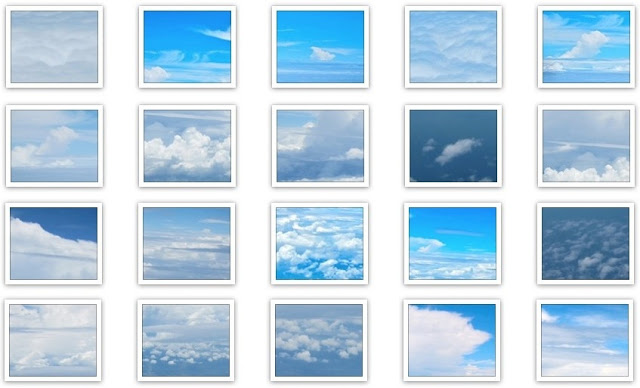
TOURING CLOUDS During the Near Space Program NSP conducted by Humanoido and the Big Brain, the space craft traveled up to the clouds, entered into and passed through the clouds, and emerged above on top of the clouds during a space journey through the Troposphere. Throughout various space flights, over 70 cloud images were taken for study and examination. As the cloud type can determine the altitude of a rising space craft, the observations can be very important.


Space tourists taking the Space1 safety rocket transport into space may have the opportunity to enjoy a great variety of cloud types and by memorizing their shapes, a space traveler might know the general rocket distance from the Earth when moving through the upward Troposphere journey.

LOW ALTITUDE CLOUDS
0-2kM Temperate Zone
0-2kM Tropics Zone
Stratus, Stratocumulus, Cumulus*, Towering Cumulus**, Cumulonimbus*, Towering Cumulonimbus**, Nimbostratus*, Fog
*   Can extend into medium level
** Can extend high level

MEDIUM ALTITUDE CLOUDS
2-4 kM Temperate Zone
2-7 kM Tropics Zone
Altostratus, Altocumulus, Nimbostratus*
* Can exist in low level

HIGH ALTITUDE CLOUDS
3-8 kM Temperate Zone
5-14 kM Tropics Zone
Cirrus, Cirrocumulus, Cirrostratus, Towering Cumulus*, Towering Cumulonimbus*, Contrails
* Can exist in low level

Cloud Identification During "Near Space" Flights
http://humanoidolabs.blogspot.tw/2013/08/altitude-from-cloud-type.html

Index
http://space1usa.blogspot.tw/2015/12/space1-index_16.html

Friday, January 22, 2016

Space1 Letters from the Founder

Effective today we'll begin presenting approved Space1 letters from our supporters, members, and the founder of Space1. These will provide inside information, updates and disclose many of the inner workings of Space1 space tourism, rockets, equipment, schedules and developments. Some previous letters may be declassified.

Space1 Date 01.22.16
From the Founder of Space1

I decided to fly into Hong Kong to buy the necessary computers and equipment for space1. So I'll be gone a short time to make these acquisitions and return to international home base, probably in about a week. It will be a good time as well to hold a space development meeting, which I have now scheduled, and check on the operations of our HK rocket launch spaceport. I think the President will attend for discussion about expanding space1, its support, and its ongoing development in space tourism. If members of Space1 have free-use Line active on their smart phones and the IDs, I might be able to provide updates about space1 during the flight, depending on the time structure, or use it for other real time and latent space purposes.

Humanoido
Founder - Space1 

Index

Thursday, January 21, 2016

Space1 Listening to Rockets

SPACE RADIO
You can listen in to Space1 rockets by constructing your own DIY equipment. Space1 rockets vary their frequency on a regular basis based on particular missions, tests, and space rocket launches. Currently we are conducting rocket telemetry tests with new systems in the HF radio spectrum.

Interests
For example, future telemetry of interest may be in the form of camera motion pictures and images showing tests, the interior or exterior of rockets, the receding Earth during rocket launches, and the environments during reentry and recovery.

How To DIY
To find the right frequency, use of an auto scanning frequency receiver will lock onto the signal. A large directional gain rotation antenna will tune in the carrier band much better. Output can be your choice of PAL or NTSC to a video monitor to show real time events. We often use sound as a component of the transmission. You might hear the roar of a rocket engine during a test. As events unfold, a capture board can save the data. For a home brew system on a budget, you can build your own DIY antenna from a small recycled satellite TV Dish. http://www.wlan.org.uk/diy-ant.html You can get some ideas from this little itty bitty radio telesscope.
http://www.stargazing.net/david/radio/itty_bitty_radio_telescope.html

Index

Wednesday, January 20, 2016

Space1 Rocket Tracking

Source
The founder of Space1 has invented a method of tracking rockets without GPS or Beacons. This is a unique way to utilize existing rocket components and track the rocket, voiding the necessity of complicated multi-process GPS tracking, or the heavy weight of a specific tracking beacon. The system does not require any extra parts as the rocket telemetry is combined with the rockets ground station to provide a real time earth visual throughout the flight.

As reentry takes place, the V part of the telemetry is transmitted back to the GS ground station which shows exactly where the rocket is located per unit time. According to the system calculus, the rate of change is qualitative analyzed, not quantitative. The simplicity and reliability of this system is within the incorporation into the rockets already existing telemetry package. Data is sent to the ground station for resolution. As the system uses existing parts and components, no GPS or complicated systems are used.

Index

Tuesday, January 19, 2016

Space1 Rocket Ground Station

The future of small ground support stations   Source
The founder of Space1 has designed a new rocket tourist ground station.  The ground station handles rocket inspection, the flight of the rocket and ensures proper recovery.

GS, Space Ground Station, handles the rocket telemetry, locks onto the air born signal automatically, provides a recording station of flight details, has multiple channels,  provides a real time video and audio monitoring of the data and the astronauts condition inside the rocket and/or views external to the rocket for inspection and tracking.

The ground station has it's own power source so it's mobile. A mobile ground station can operate from a moving vehicle whether it be a car, truck or van, or it can remain at a static location. After space flight, the Ground Station can be processed for the data it holds. GS is easily moved to multiple space ports. It can also be passed from one ground controller to another.

Index

Tuesday, January 5, 2016

Space1 Nano Supercomputer

Tower of Power - The old Spark Supercomputer machine, illustrated above, was built by humanoido and is the forerunner of Space1's Nano Super Computing machine. By comparison to the new nano supercomputer, the Spark was a massive tower of computing and controlling power.

For the new nano, a mesh construction has up to one million processors and 32,000 controls. The nano computer will take up residence at the corporate Space1 location in the USA and has options to command the launch control center, the rocket laboratory, and the space research facility to run advanced experimentation in space and time. The nano space super computer will also be used to conduct quantum research as applied to space travel.

Space1 has designed a powerful new nano supercomputer, also known as the nano super space computer. Plans are moving forward in the design for construction using parallel dimensioned multi-core chips, thus creating a new nanoized supercomputer installation in the USA.

SIZE
The design for the new supercomputer has a much smaller footprint than many super computing machines created at Humanoido Labs, and it will offer portability for non-permanent rocket sites that are moved around.

IMPLEMENTATION
Uses for the new Space1 Nano Super Computer at the USA location may include weather, analysis, rocket flight, track, monitor, extrapolate, interpolate, integrate, design, statistics, and hard core cutting edge research. Part of this is the exploration of the machine in creating a new kind of intellectual machine mind.

DESIGN
This design begins at Humanoido Labs with a ten modular NANO mainframe design using expanded 8 Parallel Dimensioned core ICs wired into a mainframe mesh of 10x8x125 = 10,000 processors per Mesh.

SPACE MESH
Each Space Mesh can control a significant part of the interface realm, enabling true functioning nano intelligence. A ten Mesh device with ten thousand processors will enable 320 real world point control. For each 100 Mesh, 3200 items can be controlled with 100,000 processors. Expanded to 1K, the machine will control 32,000 objects and contain a million computing processors.

SPACE SUPERCOMPUTER SPECIFICATIONS
10 Mesh - 10,000 Processors, 320 controls
100 Mesh - 100,000 Processors, 3,200 controls
1000 Mesh - 1,000,000 Processors, 32,000 controls

Space1 Index

Friday, January 1, 2016

Space1 Space Romance

Space1 tours in space, for the first time in history, plan to introduce romance in space. In the past, the technical nature of space flight, the uncertainly, complexity and the dangers precluded the principle enjoyment of a couple's romance.

Now for the first time, Space1 and the Safety Rocket can introduce a romantic space tour package for couples wanting to tour space in ways never experienced before.

We will provide a special private and romantic rocket chamber decorated with the subtle romantic elements of a love ride in space. A crew com- partment for two, will com-
pliment the Safety Rocket, and touring sites will be selected for a romantic setting in space. Space rides will be ideal for romantic space flings, engagements, marriages and engaging in exotic space love - cameras are optional.

Book your early romantic rocket flights with your loved one and reserve a place to shoot towards the Moon and romantic scintillating stars some starry starry night.

Space1 Index

Space1 Time

Index 

Space1 has a big interest in time, to attempt to slow it down, or extend it, thus increasing the length of space tourism.

Time in a Bottle

The study of time is more than interesting. As Einstein pointed out, time is a thing, a dimension, an element. Therefore time that has passed still exists somewhere.

Where did it go? If we can find time that has passed, could it be added to existing time to increase its length? Time can also be dilated. Moving clocks run slow when accelerated faster than a tenth the speed of light.

The objective is to slow down time during Space1 tourism
Intense gravity will cause a clock to run slow causing it to time travel when returned to its relative point of origin.

Can any of these techniques in time work for slowing down space tourism? We think time can slow down for space tourism, but will use another approach.

There's the time in a bottle approach. We want to put the existing time experience of a space tour into a bottle and then stretch that bottle, thus stretching the fabric of time at the same time, simultaneously. This is a technique different from traveling at speeds near light travel, or undergoing the juxtaposition of a gravity well.

Albert Einstein defined time
The advantages of stretching time will cause a space tour to increase in length, last longer, and it will allow the space tourist to take in more sites, places, and events.

How will we stretch the the bottle of events, thus growing the fabric of space and time?

How can we fit time into a bottle? Can Jim Croce's Time In A Bottle apply to space tourism? Space1 is currently developing methods to extend time, making one moment in time last a longer time. Goals may be time extenders at 2x, 3x, ... 10x. Key to a working solution is time in a bottle.

Singer song-writer Jim Croce, in the 1970s, lyrically pointed out the romantic value of saving time in a bottle, making days last forever.
 
Time in a Bottle - Jim Croce
https://www.youtube.com/watch?v=fyTfbtZeGeU

"Time in a Bottle" is a hit single by singer-songwriter Jim Croce. Croce wrote the lyrics after his wife Ingrid told him she was pregnant with his son, Adrian, in December 1970.

The romance of space tourism is an upcoming part of Space1's great adventure in space. Stay tuned for more.

Space1 Index

Thursday, December 31, 2015

Space1 Sequential Rocket Flight

Space1 views each touring rocket flight as sequential, a series of steps that must transcend from the beginning of launch (including all steps before the launch) to recovery (and steps after recovery).

The sequence is the same for nearly all Space1 rocket flights and is predetermined.

* Mission Control Initialization
* Launch Tower/Rocket Prep
* Flight Computer On 
* Internal Imaging On
* External Imaging On
* Launch Tower Camera On
* Tracking Camera On
* Ignition Sequence
* Launch
* Window Views Begin
* Vibration
* Thrust Acceleration
* Buffeting
* G-force Experienced
* Rocket Engine Fuel Depletion
* Coasting
* Tourism Views
* Apogee Reached
* Weightless
* Freefall
* Capsule Ejection
* Parachute Deployment
* Micro Beacon Activation
* Return Glide
* Buffeting
* Impact
* Rocket Finder
* Internal Imaging Off
* External Imaging Off
* Landing Inspection
* Imaging
* Recovery
* Launch Tower Retraction
* Return to Hangar/Rocket Lab
* Rocket Reuse Prep
* Engine Removal

Space1 Index

Space1 Spacesuit

Space1 is working on a spacesuit, necessary for space tourism. The suit is currently being designed and manufactured at Space1 Taiwan lab (Space Lab) and facilities.

We expect several design variations with various functions for the missions at hand. Important aspects of the space suit include the following wearable categories:

* Face Helmet
* Body Glove
* Body Plate

These sections are designed to function in unison and react to the space environment, giving the feedback necessary for the space tourist to experience the changing environment. Additional features can include Rocket Vision, which is the ability to extend the vision range of humans during tourist space flight to see more space attractions.

In one example, during the flight, tremendous G force will occur but the space suit will insulate the wearer from the full effects of peak acceleration. The face-plate will allow the astronaut to view through a "space window" to see the the shrinking Earth, and various elements and touring features of space. The body plate will ensure safe level feedback of strong vibration and heavy buffeting from the Safety Rocket. It will also handle the effects of weightlessness and provide more comfort for the space1 tourist.

The key is the wearer will safely experience the sights, sounds, and feelings of the rocket ride throughout touring space from liftoff to recovery and everything in between.

Building the first space suit requires a modular construction and component testing. A new spacesuit computer is being designed to handle the transitions of flight. The space suit computer will function with autonomy and have HW programming in new hard wired language designed specifically for the Space1 suit. The complexity of the original suit is being simplified not only for simple intuitive use but to bring down costs to an essential minimum.

The suit cost reductions will contribute to making space tourism affordable to the largest population in history. It will seamlessly function as part of the safety net, ushering in a new era of space travel, taking science fiction into the territory of science fact.