Showing posts with label sky. Show all posts

Sunday, April 4, 2021

Sky Blaster Invention


Introduction of the Pacific Sky Blaster Invention

by Humanoido

The Pacific SkyBlaster invention is a multi purposed device created by Humanoido to simultaneously crack open both light pollution and air pollution at different gradients, as well as compensate for atmospheric disturbances of RH.

Diagram above: Example of an IASI spectrum containing absorption features of different species important for air pollution and climate monitoring


In the case of light pollution (see illustration directly above), specific spectral regions are a problem. The SkyBlaster must deal with both air pollution and light pollution. A third type of sky contaminant is haze or fog. Affectual heavy and light content water vapor, relative humidity, must be compensated as well. The invention is created by solving each spectral spike and the RH issue. Solving for RH alleviates much of the haze in the upper atmosphere as well as light ground level fog. Frequently fog is mixed with air pollution smoke becoming fog. Therefore a solution to solve smog is required. This is accomplished by combining all solutions into one device and/or the catenation of devices to make one working machine.

Another aspect of light pollution is mercury vapor which is difficult to eradicate because it significantly permeates the entire visible spectrum. The working idea here is to block the most significant spectral spikes in the range of 350 to 700 as shown above. Prior to the SkyBlaster, cracks and holes appeared in the overcast or cloud and haze studded sky, and astro viewing was brief through these portals.

Monday, February 10, 2020

Space1 Sky Penetrator

Humanoido's invention, the Sky Penetrator SP, is a marvel of the age, able to penetrate a
completely cloudy sky for astronomical and rocket purposes.
Space1 Sky Penetrator
SPACE1 is helping to bring the spectacular Sky Penetrator Machine online, which can can see through the sky on cloudy days

How do you get vision to see through clouds on cloudy days? SPACE1 working in tandem with TransHuman (part AI machine, part human) Humamoido has developed the SP Sky Penetrator to see through cloudy days for astronomical (see Singularity Observatory) and rocket missions (see SPACE1).

This is not the first time that Humanoido has invented a device to clear up the sky. Earlier, the Cloud Cracking device was put into use for Singularity Observatory and was utilized to decode Lunar projects. The SP is a more sophisticated and capable device and handles the water vapor fringing at the object perimeter. In a classic dt/dx, the SP dukes out its function in real time and allows gathering of data for spectacular operations.

Sunday, December 15, 2019

Space1 Massive Sky Hole Opens

Space1 Massive Sky Hole Opens
A massive sky hole has opened up above the South Pacific Ocean

Under constant observation, the massive sky hole opened up on the morning of Monday, December 16th, 2019.

Sky holes open up unexpectedly from time to time, and can have multifunctions. In this case, the sky hole is ideal for astronomical research and space programs, launching rockets and equipment.

Monday, May 27, 2019

Singularity Observatory Spectacular Night Time Operation

Singularity Observatory Ramps Up Spectacular Night Time Operations
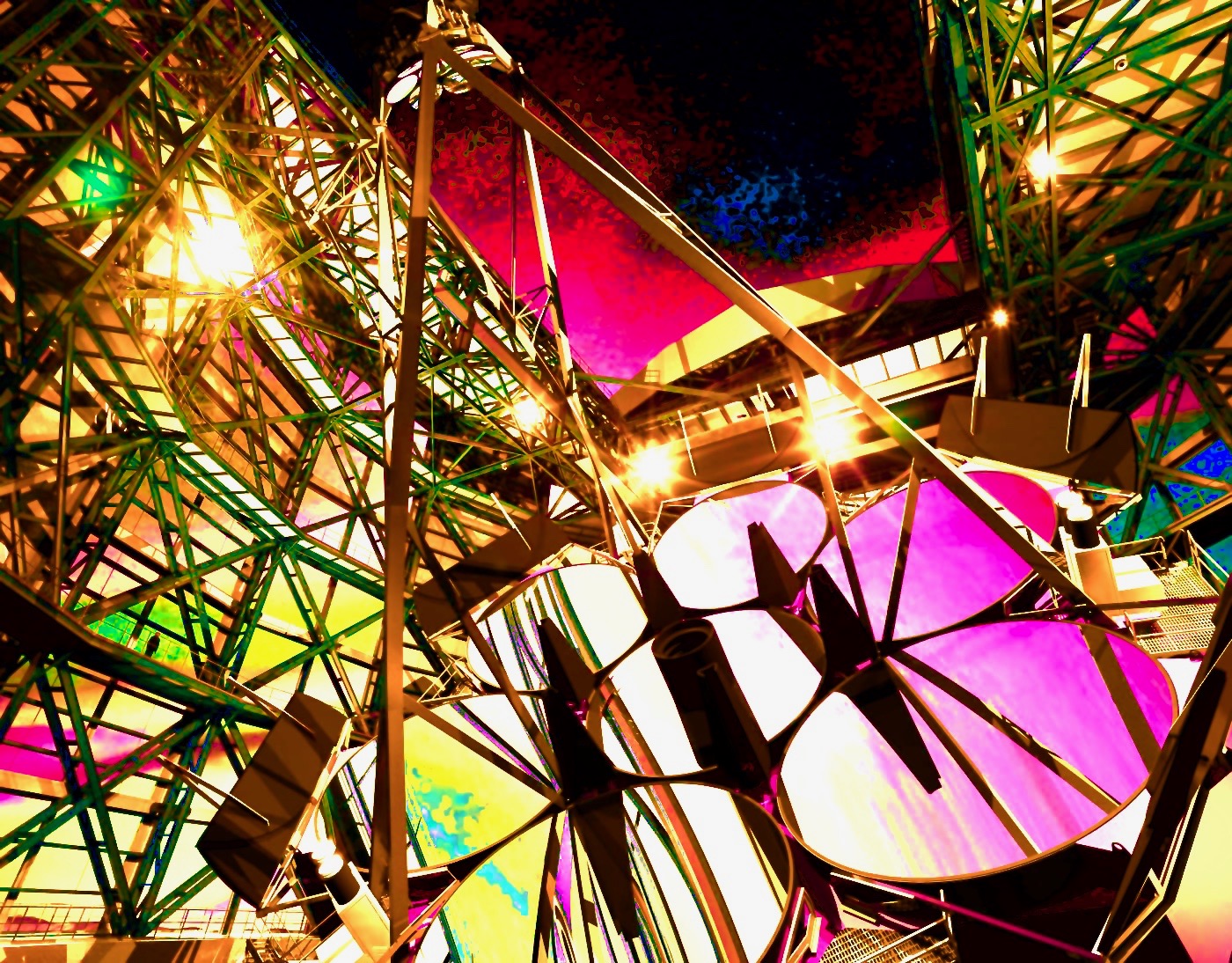
As the Monsoon period is coming to an end, the weather has stunningly improved to the most perfect conditions as the massive Singularity Observatory Amped 1,800-inch diameter telescope is rolled out into position for some truly stellar observing!

News Alert! After a recent two months in hibernation due to a total sky blanket caused by the Monsoon period over the Pacific Ocean, SPACE1 has opened the door to Singularity Observatory and awakened the beast. As the sky increasingly clears, the extremely massive amped telescope now has numerous tricks to emblazon operational results after having the previous year to gain incredible operational knowledge.

This is the fantastic Xtelescope that gave spectacular views of Mars during 2018 opposition. Stay tuned here as we publish the telescope's most amazing and mind boggling photos and discoveries. The great journey is just beginning! We will publish general overview information on telescope performance at the blog site. Those lucky friends having direct email correspondence with Humanoido will have the most fantastic information, photos, and material sent out free as it becomes available.

Monday, September 10, 2018

SPACE1 Sky Study September 2018

SPACE1 created these two time views of the current sky to show Mars and Saturn poised for study, and M42, the Great Orion Nebula. The planetarium type computer representations are calculated for a position in the South Pacific Ocean where a portion of the Southern Sky is visible. Note the times, one in the evening, one in the early morning. Dimmest stars are near 7th magnitude. Shown are normal sky and red views, the latter for observing outside to keep eye dark adaptation. Mars is making a fast retreat past opposition as well as Saturn. Both are moving towards the western sky direction. Views are adapted from SkyPortal, the leading wireless Wifi GOTO software for Celestron telescopes and offline planetarium studies of the night sky.


Thursday, July 12, 2018

Skyscraper Observatory Under Construction

New skyscrapers closer to the sky
SKYSCRAPER OBSERVATORY
with 46-Meter Xtelescope

Breaking News! Saturday July 14, 2018
All throughout the months of May, June and July, Humanoido has led the final construction of a vast new observatory. The code name for construction is Skyscraper Observatory named after the immense new high-rise building that towers up deep into the night sky.

Skyscraper Observatory
This new elevated boutique constructed skyscraper observatory structure has unusual quad wide dimensions for super stability and is located on an isolated island in the South Pacific Ocean where telescope seeing conditions are of the best in the world. Skyscraper observatory is a vast operation and is the second extremely large lifetime observatory project conducted by Humanoido.

Telescope Observatory Array
Mission control is adjacent to the outdoor telescope which is visible through an entire wall of transparent glass (with view of the telescope, majestic landscape and sky). The telescope anchors onto a suspended sky platform composed of cement, granite and wrought iron. It's sturdy structure is designed to take baking sun, rain, earthquakes and tropical storms with typhoon force winds. The telescope observatory includes a protective sub ceiling and sub lateral walls designed to withstand strong storms. The area includes running water and a three sided sub room shelter. The protective sub ceiling can shield against incoming cosmic rays.

Mission Control
The facility includes a mission control center to command the large goto digital wireless telescope, which is robotically controlled with plate solving AI and five computers. This control center includes an astronomical library, computer center, and node room for storage of telescopes and astronomical devices. Mission control is the first South Pacific Amping Telescope Center where the 46-meter Xtelescope is created and commanded. Mission Control is also the office central and corporate office for Space1 Industries in the development of safety rocket space tourism.

Main Room
Another clear glass wall from Mission Control leads to the main room, for meetings, dining, and monitoring news and weather. The main room has a wall for storage of electronics and robotics parts and is adjacent to the galley.

The Lab
This room is a laboratory for conducting work with telescopes, electronics, rockets, humanoid robots, machine life forms, and tracer drones. It also includes multiple lab benches, test equipment, library, humanoid robot showcase, and houses an inventory of rocket parts, humanoid robots, electronic parts, the Big Brain AI machine life form supercomputer, and other scientific items. Other machine life forms employed by Space1 may also work for the observatory.

Telescope Sub Portal Island
An island for the telescope is the small sub portal room. Inside are the telescope's OTA tube, 3 counterweights, mariner's chain, power supply, cables, finder scope and boxes of some big accessories. Things that don't fit are the mount, tripod and tray support, but these set next to the portal door on the floor outside, for now. The sub portal resides inside the mission control room under the steps leading to the loft. It has a floor platform and two sunken in shelves to the East.

Lofts
The observatory has three elevated high level lofts. Mission control has a monitoring loft with a wide window view of the telescope's array and the night sky. The lab has a lab loft for storage and the third loft is above the bedroom.

Inclusions
The observatory can execute highly regulated temperatures with its included four air conditioners and multiple sliding glass walls. It has three lofts, two baths, two decks, and a large elevator which rides directly to the roof for transport of telescopes and equipment for additional astronomical viewing. Here, a telescope setup shows the non-obstructed entire night sky at maximum altitude. Extra wide hall ways are for transporting wide equipment and the building employs full detail multiple security checkpoints and full time armed security guards.

Sunday, April 15, 2018

Space1 Spaceport in the Sky

Spaceport in the Sky Design
In this design approach, a plane carries the rocket to 30k feet and then drops it. The rocket takes off and can either go higher or return to the Earth. Space1 is looking at providing the actual real estate land on the plane (drone) in the sky for the rocket launch AND landing. It's a spaceport in the sky. A large enough drone could support numerous rocket pads and a large overall spaceport with hangars for spaceships.

Space1 has developed a successful test. The largest owned drone was prepped and taken to altitude with the contents of one rocket. At apogee, the drone was flipped to launch the rocket. The rocket ejected a parachute and returned safely to the Earth for a complete recovery, ready for reuse. To launch the rocket farther into space, the drone needs to have a prepped rocket launcher and rocket.

Wednesday, January 31, 2018

Space1 Hexcopter Sky Rocket Pad

Space1 is working on its Hexcopter Sky Rocket Pad as a viable way to launch rockets and gain greater altitude while saving on fuel. In the conceptual design illustration, the enclosed center contains real estate for the launch pad, tower, and rocket. A fully fueled rocket is heavy, such as the ISS PIONEER and more lofting experiments will be conducted to ascertain the reliability of the system.

Thursday, June 29, 2017

Space1 SkyPort Drone Spaceport

SkyPort Spaceport
Space1 has developed the SkyPort Spaceport design. SkyPort is a rocket spaceport in the sky, developed from large drone technology.

A field of ground is created and rocket launch gantries are developed on top of the drone. The drone rises and parks to a given altitude where it resides on stable hover mode. The rocket is launched in the sky and returns to the same sky point, landing on the sky spaceport. The advantage is the SkyPort can park above international waters and no boats or marine recovery equipment are needed. The SkyPort can also park at places of international air space far above ground to avoid international conflicts.

Space1 Contact
http://space1usa.blogspot.tw/2017/06/space1-contact.html
Space1 Index
http://space1usa.blogspot.tw/2015/12/space1-index_16.html
Space1 Index Big Brain Site Prior to 2014
http://space1usa.blogspot.tw/2017/05/space1-big-brain-index-of-space.html
Space1 Home
http://space1usa.blogspot.tw/
Space1 Profile 2017
http://space1usa.blogspot.tw/2017/03/space1-space-profile.html

Humanoid Robots Home
http://humanoidslabs.blogspot.tw/
Humanoid Robots Index
http://humanoidslabs.blogspot.tw/2017/02/humanoid-robots-index.html

Big Brain Home
http://humanoidolabs.blogspot.tw/
Big Brain Index 1
http://humanoidolabs.blogspot.tw/2016/12/fill-brain-project-searchable-thread.html
Big Brain Index 2
http://humanoidolabs.blogspot.tw/2016/12/big-brain-web-site-index.html
Big Brain Timeline
http://humanoidolabs.blogspot.tw/2016/12/big-brain-timeline_1.html
Big Brain Contributions
http://humanoidolabs.blogspot.tw/2016/12/big-brain-contributions_13.html

Monday, June 5, 2017

Space1 City in the Sky

City in the sky rises until it reaches Earth orbit
Space1 City in the Sky development, a new kind of real estate in the sky
The blueprint shows numerous propulsion engines to support indefinite suspension
Space1 is proposing vast cities in the sky
Sky Real Estate Development

Today we have military drones capable of days long flight and supporting an array of equipment and weapons. In the future, a floating city in the sky could be kept afloat by other power generation. Space1 is proposing a step by step city. When the space on Earth runs out of room for skycrapers built up to the limit height, a new form of structure will be needed. Cities in the sky are the next logical approach to sky real estate development.

Space1 Index
http://space1usa.blogspot.tw/2015/12/space1-index_16.html
Space1 Index Big Brain Site Prior to 2014
http://space1usa.blogspot.tw/2017/05/space1-big-brain-index-of-space.html
Space1 Home
http://space1usa.blogspot.tw/
Space1 Profile
http://space1usa.blogspot.tw/2017/03/space1-space-profile.html

Humanoid Robots Home
http://humanoidslabs.blogspot.tw/
Humanoid Robots Index
http://humanoidslabs.blogspot.tw/2017/02/humanoid-robots-index.html

Big Brain Home
http://humanoidolabs.blogspot.tw/
Big Brain Index 1
http://humanoidolabs.blogspot.tw/2016/12/fill-brain-project-searchable-thread.html
Big Brain Index 2
http://humanoidolabs.blogspot.tw/2016/12/big-brain-web-site-index.html
Big Brain Timeline
http://humanoidolabs.blogspot.tw/2016/12/big-brain-timeline_1.html
Big Brain Contributions
http://humanoidolabs.blogspot.tw/2016/12/big-brain-contributions_13.html